Key facts
- You can explore the historic center (Plaza de Armas, Qorikancha, San Blas, Hatun Rumiyoc and San Pedro Market) on foot in one day.
- Sacsayhuamán, Qenqo, Puka Pukara and Tambomachay can be seen together in half a day, on foot or on a city tour.
- The full Tourist Ticket is valid for 10 days, but it doesn’t include the Cathedral, the Qorikancha temple, the Salt Mines or Machu Picchu.
- The Sacred Valley, lower than Cusco, is ideal for acclimatizing before Machu Picchu.
- Save Rainbow Mountain and Humantay Lake for when you’ve spent at least two days in Cusco.
- With three days you can see the city, the Sacred Valley and Machu Picchu.
In this guide
- 1. Plaza de Armas and the Cathedral
- 2. Qorikancha, the Temple of the Sun
- 3. San Blas Neighborhood
- 4. Hatun Rumiyoc Street and the Twelve-Angled Stone
- 5. San Pedro Market
- 6. Sacsayhuamán and the Nearby Inca Sites
- 7. Sacred Valley: Pisac, Ollantaytambo and Chinchero
- 8. Maras and Moray
- 9. Machu Picchu
- 10. Rainbow Mountain
- 11. Humantay Lake
- 12. South Valley: Tipón, Pikillacta and Andahuaylillas
- Summary Table: The 12 Places at a Glance
- How to Combine Them in 1, 2 or 3 Days
- More Things to Do in Cusco
- Bottom Line: What to Do Based on Your Trip
Cusco has 12 must-see places: five in the historic center, which you can explore on foot, and seven on the outskirts, which you visit on half-day or full-day trips. With one day you can see the city and its Inca sites; with three you can add the Sacred Valley and Machu Picchu. The order matters: start with the lower places and save the mountains above 4,000 m for last.
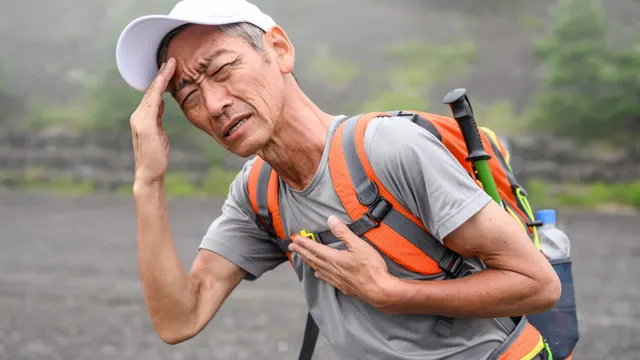
Important: Cusco sits at about 3,399 m. On the day you arrive, walk slowly and drink water. Do the plans in the center and the Sacred Valley first, and save Rainbow Mountain and Humantay for when you’ve spent at least two days in the city. More details in our guide to altitude sickness in Cusco.
1. Plaza de Armas and the Cathedral
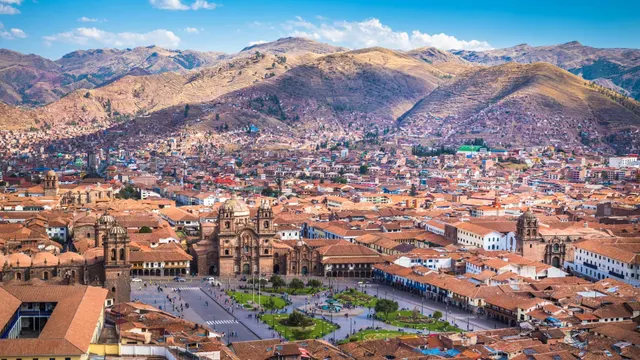
The Plaza de Armas stands on the old Huacaypata, the great ceremonial square of the Inca capital. Today it’s framed by colonial arcades, the Cathedral and the Church of the Society of Jesus (La Compañía). From here you can walk to everything in the center. The Cathedral holds a large collection of Cusco School paintings, including a Last Supper with a guinea pig (cuy) on the table.
- Time needed: 30 minutes for the square and about an hour for the inside of the Cathedral.
- Getting there: it’s the heart of the historic center.
- Admission: the square is free. The Cathedral has its own admission fee, paid at the door and not included in the Cusco Tourist Ticket.
- Best time: the Cathedral in the morning; the square at night too, when it’s lit up.
- Practical tip: check visiting hours at the door, since they change on Mass days and holidays.
2. Qorikancha, the Temple of the Sun
The Qorikancha, the “golden enclosure,” was the most important temple in the Inca Empire. The Dominicans built the Convent of Santo Domingo on top of its walls, and today you can see both eras side by side. The earthquakes of 1650 and 1950 damaged the colonial church and exposed the Inca walls, which held up much better. More background in our Qorikancha guide.
- Time needed: one hour to an hour and a half.
- Getting there: a five-minute walk from the Plaza de Armas, between Avenida El Sol and Calle Santo Domingo.
- Admission: the temple has its own admission fee, not included in the Tourist Ticket. The Qorikancha Site Museum, in the lower gardens, is included.
- Best time: in the morning, before the city tour groups arrive; they usually start here in the afternoon.
- Practical tip: from Avenida El Sol you can see the curved Inca wall of polished stone, lit up at night.
3. San Blas Neighborhood
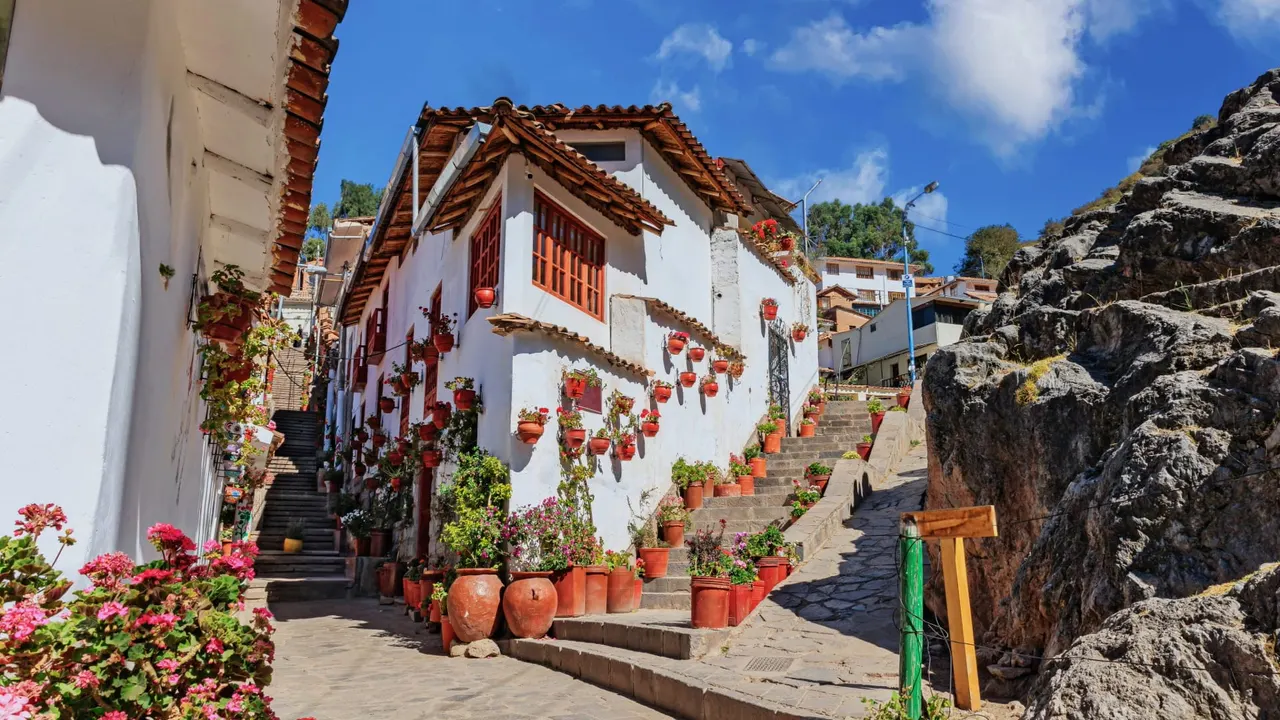
San Blas is the artisans’ quarter: steep cobblestone streets, whitewashed houses with blue balconies, craft workshops, cafés and viewpoints. Its church is famous for a pulpit carved from cedar wood, a gem of the Cusco Baroque. Read our full guide to the San Blas neighborhood.
- Time needed: one to two hours, at an easy pace.
- Getting there: a five-minute walk from the Plaza de Armas, up Calle Triunfo and then Hatun Rumiyoc.
- Admission: the streets are free. The church is part of the Archdiocese of Cusco’s religious circuit, which has its own ticket.
- Best time: mid-afternoon, when the workshops open, and sunset at the viewpoints higher up.
- Practical tip: it sits at about 3,450 m and the slopes are steep. Take the climb slowly.
4. Hatun Rumiyoc Street and the Twelve-Angled Stone
Hatun Rumiyoc is a narrow street lined by an Inca wall of stones fitted together without mortar. The wall belonged to a palace attributed to the Inca Roca and today supports the Archbishop’s Palace. It holds the famous Twelve-Angled Stone, the best example of how the Incas carved each block to fit snugly against its neighbors.
- Time needed: 15 to 20 minutes.
- Getting there: two or three minutes from the Plaza de Armas, on the way to San Blas.
- Admission: free; it’s right on the street.
- Best time: early in the morning, before groups gather in front of the stone.
- Practical tip: if you take a photo with people in traditional dress, it’s customary to leave a tip.
5. San Pedro Market
San Pedro is Cusco’s central market and the cheapest place to try local food: fruit juices, soups, set lunches (menú del día), breads and cheeses. This is everyday Cusco, far from the tourist restaurants. What to order is covered in our guide to traditional Cusco food.
- Time needed: 45 minutes to an hour, or longer if you stay to eat.
- Getting there: on foot from the Plaza de Armas, down Calle Mantas and then along Santa Clara, next to the San Pedro train station.
- Admission: free.
- Best time: in the morning; by mid-afternoon many stalls have already closed.
- Practical tip: carry small bills and keep an eye on your belongings.
6. Sacsayhuamán and the Nearby Inca Sites
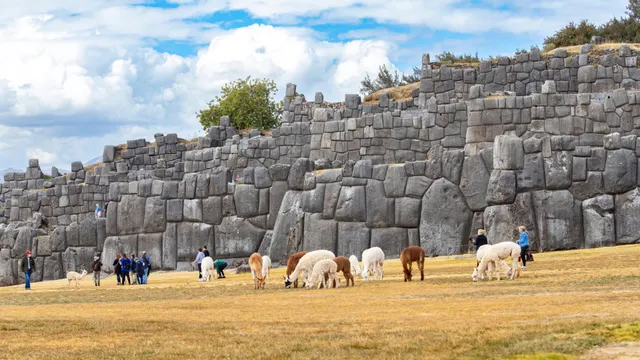
Sacsayhuamán is the great Inca complex that overlooks Cusco from the north, with zigzag walls made of stone blocks weighing more than 100 tons. Every June 24, the Inti Raymi is staged on its esplanade. Close by are Qenqo, a carved rock with an underground altar; Puka Pukara, an old checkpoint; and Tambomachay, the “Bath of the Inca,” with fountains that still flow. All the details are in our Sacsayhuamán guide.
- Time needed: 1 h 30 min to 2 h for Sacsayhuamán; half a day for all four.
- Getting there: Sacsayhuamán is about 2 km from the Plaza: 30 to 40 minutes on foot through the streets of San Cristóbal, or 10 minutes by taxi. Qenqo is about 4 km from the Plaza, and Tambomachay about 8 km along the road to Pisac.
- Admission: all four sites are included in the Cusco Tourist Ticket, full or partial; there’s no individual ticket.
- Best time: early in the morning or late in the afternoon, with better light and fewer groups.
- Practical tip: take a taxi up to Tambomachay and walk back downhill past Puka Pukara, Qenqo and Sacsayhuamán.
Afternoon city tours from Cusco usually cover the Qorikancha and these four sites in half a day, with a guide and transportation.
7. Sacred Valley: Pisac, Ollantaytambo and Chinchero
The Sacred Valley is the valley of the Urubamba River, milder and lower than Cusco, at about 2,870 m. It has three must-see stops: Pisac, with Inca terraces cascading down the mountain and a craft market; Ollantaytambo, with Inca streets and water channels still in use and a granite fortress; and Chinchero, at about 3,760 m, with a colonial church built on Inca walls and traditional weaving centers. Read our guide to the Sacred Valley of the Incas.
- Time needed: a full day for all three stops.
- Getting there: by road. Pisac is 33 km away (1 hour), Chinchero 30 km (40 minutes) and Ollantaytambo 72 km (1 h 45 min).
- Admission: all three archaeological complexes are included in the Cusco Tourist Ticket, either the full ticket or the Sacred Valley partial ticket.
- Best time: year-round, with less rain from April to October. Chinchero has a market on Sundays.
- Practical tip: if you’re heading to Machu Picchu next, spend the night in the valley and catch the train in Ollantaytambo the following day.
Sacred Valley day tours from Cusco usually leave early in the morning, last about 10 hours and include a guide and a buffet lunch in Urubamba.
8. Maras and Moray
On the plateau above the Sacred Valley, at about 3,500 m, two very different places sit just a few kilometers apart. Moray is a set of circular terraces that, according to researchers, the Incas used to experiment with crops at different temperatures. The Maras Salt Mines are thousands of salt pans on the hillside, worked by local families for centuries. More information in our guide to Maras and Moray.
- Time needed: half a day, about 6 hours from Cusco.
- Getting there: they’re about 50 km from Cusco (1 h 30 min), across the Chinchero plain.
- Admission: Moray is included in the Cusco Tourist Ticket; the Salt Mines have their own admission fee, paid on site.
- Best time: in the morning, so you’re back in Cusco in time for lunch.
- Practical tip: bring cash in soles for the Salt Mines entrance.
9. Machu Picchu
The most famous Inca citadel in the world, built in the 15th century and a UNESCO World Heritage Site since 1983. It sits at 2,430 m, almost a thousand meters lower than Cusco, on a mountain between the Urubamba and Aobamba rivers. Read our Machu Picchu guide.
- Time needed: a full day from Cusco (about 16 hours on a tour) or two days with a night in Aguas Calientes. The guided visit takes about 2 h 30 min.
- Getting there: there’s no direct road. You take the train to Aguas Calientes, from Ollantaytambo (1 h 30 min to 2 h) or from Cusco, and ride the bus up in 25 to 30 minutes. Every option is covered in how to get to Machu Picchu.
- Admission: a separate ticket from Peru’s Ministry of Culture, with a date, entry time and circuit. It’s not part of the Cusco Tourist Ticket.
- Best time: the first time slots, from 6:00 a.m., when it’s less crowded; for that, it’s best to stay overnight in Aguas Calientes.
- Practical tip: bring your original passport; it’s checked at the entrance.
Important: Machu Picchu tickets are the first thing to sell out. Buy yours before your train and hotel, on Tu Boleto, the Ministry of Culture’s site, or through an agency.
10. Rainbow Mountain
Vinicunca is a mountain striped with bands of color formed by minerals, in the Vilcanota range, with views of the snowcapped Ausangate. The climb isn’t long, but it’s done above 4,600 m and the summit sits at about 5,036 m: the challenge is the lack of oxygen. Read our Rainbow Mountain guide.
- Time needed: a full day, about 14 hours.
- Getting there: about 3 hours by road and a 1 h 30 min to 2-hour hike up. Tours pick you up at your hotel between 4:00 and 4:30 a.m.
- Admission: a community entrance fee, paid in cash. It’s not part of the Tourist Ticket.
- Best time: April to November. In the rainy season, snow can cover the colors.
- Practical tip: do it after at least two days in Cusco. If you’re traveling with kids or don’t feel acclimatized, Palcoyo offers rainbow mountains with a much shorter hike.
11. Humantay Lake
A turquoise lake at the foot of the snowcapped Humantay, in the Vilcabamba range, at about 4,200 m. It’s on the Salkantay trek route and sits lower than Rainbow Mountain, although the trail is steep. All the information is in our Humantay Lake guide.
- Time needed: a full day, about 13 hours.
- Getting there: about 3 hours by road to Soraypampa, via Mollepata, and an hour-and-a-half climb. You return the same way.
- Admission: a community entrance fee, in cash.
- Best time: April to November. Departures are before dawn, around 4:30 a.m.
- Practical tip: dress in layers: the morning is very cold and the midday sun gets warm. Horses are available for the climb, at an extra cost.
12. South Valley: Tipón, Pikillacta and Andahuaylillas
The South Valley is the quiet alternative to the Sacred Valley, with three eras packed into a few kilometers. Tipón has terraces with Inca water channels and fountains that still work. Pikillacta is a large city of the Wari culture, which predates the Incas. And the 17th-century Church of San Pedro Apóstol in Andahuaylillas is known as the “Sistine Chapel of the Americas” for its murals. More information in our guide to the South Valley of Cusco.
- Time needed: half a day for all three places.
- Getting there: by road heading southeast. Tipón is 23 km away (40 minutes), Pikillacta 30 km (45 minutes) and Andahuaylillas 40 km (1 hour).
- Admission: Tipón and Pikillacta are included in the Cusco Tourist Ticket; Andahuaylillas has its own admission fee, from the Andean Baroque Route.
- Best time: year-round. Set out in the morning.
- Practical tip: in Saylla, along the way, you can try Cusco-style chicharrón, and in Tipón, oven-roasted guinea pig.
Summary Table: The 12 Places at a Glance
| Place | Time | Admission | Best for |
|---|---|---|---|
| Plaza de Armas and Cathedral | 1 h 30 min | Square free; Cathedral, separate admission | A first look at the city and colonial art |
| Qorikancha | 1 h to 1 h 30 min | Separate admission (site museum with the Tourist Ticket) | Understanding the Inca and colonial blend |
| San Blas Neighborhood | 1 to 2 h | Streets free; church with a religious circuit ticket | Crafts, cafés and photos |
| Hatun Rumiyoc | 15 to 20 min | Free | Seeing Inca stonework up close |
| San Pedro Market | 45 min to 1 h | Free | Eating cheaply and seeing everyday Cusco |
| Sacsayhuamán and nearby sites | 2 h to half a day | Tourist Ticket | Monumental Inca architecture |
| Sacred Valley | Full day | Tourist Ticket | Acclimatizing and seeing Andean towns |
| Maras and Moray | Half day | Moray with the Tourist Ticket; Salt Mines, separate admission | Unique landscapes with little effort |
| Machu Picchu | 1 or 2 days | Separate ticket with date, time and circuit | Every traveler: it’s the essential one |
| Rainbow Mountain | Full day | Community entrance fee | Hikers who are already acclimatized |
| Humantay Lake | Full day | Community entrance fee | Nature and high mountains |
| South Valley | Half day | Tipón and Pikillacta with the Tourist Ticket; Andahuaylillas, separate admission | Escaping the crowds and eating well |
Tip: if you’re going to visit Sacsayhuamán and the Sacred Valley, the full Tourist Ticket is your best bet. It’s valid for 10 days and also covers city museums and the Centro Qosqo de Arte Nativo. It doesn’t include the Cathedral, the Qorikancha temple, the Salt Mines or Machu Picchu. Learn how to use it in our guide to the Cusco Tourist Ticket.
How to Combine Them in 1, 2 or 3 Days
We group what’s close together and save the altitude for last. If you have more time, check out our 3-, 5- and 7-day Cusco itineraries.
Cusco in 1 Day
- Morning: Plaza de Armas and the Cathedral, Hatun Rumiyoc and a stroll through San Blas.
- Midday: lunch or a juice at San Pedro Market.
- Afternoon: a city tour or a taxi circuit: Qorikancha, Sacsayhuamán, Qenqo, Puka Pukara and Tambomachay.
- Evening: the Plaza de Armas lit up and dinner in the center.
If it’s your arrival day, skip San Blas: a city tour includes transportation and takes little effort.
Cusco in 2 Days
- Day 1: the one-day plan in the city.
- Day 2: a full day in the Sacred Valley, with Pisac, Ollantaytambo and Chinchero.
A shorter alternative for the second day: Maras and Moray in the morning and the South Valley in the afternoon.
Cusco in 3 Days
- Day 1: historic center and the nearby Inca sites.
- Day 2: Sacred Valley and the afternoon train from Ollantaytambo to Aguas Calientes.
- Day 3: Machu Picchu early and back to Cusco in the afternoon or evening.
If you’ve already been to Machu Picchu or plan to see it on another trip, use the third day for Rainbow Mountain or Humantay Lake.
More Things to Do in Cusco
- Cusco at night: dances at the Centro Qosqo de Arte Nativo, peñas (live folk music venues) and San Blas bars. Ideas in Cusco at night.
- Tourist Ticket museums: the Museum of Contemporary Art, the Regional Historical Museum, the Museum of Popular Art and the Pachacútec Monument.
- Cristo Blanco lookout: right next to Sacsayhuamán, with a view of the whole city.
- Inti Raymi: the Festival of the Sun, every June 24, at the Qorikancha, the Plaza de Armas and Sacsayhuamán.
- Palcoyo: rainbow mountains with a short hike and few visitors.
- Treks to Machu Picchu: the Inca Trail, Salkantay or Lares.
Bottom Line: What to Do Based on Your Trip
- You only have one day: the historic center on foot in the morning and the nearby Inca sites in the afternoon.
- It’s your first visit: the city, the Sacred Valley and Machu Picchu, in that order.
- You’re traveling as a family: San Blas, the market, the Sacred Valley and Maras and Moray; Palcoyo instead of Vinicunca.
- You love hiking: save Rainbow Mountain and Humantay for last, once you’re acclimatized.
- You want to avoid crowds: the South Valley and Sacsayhuamán first thing in the morning.
The next step is to lock in your Machu Picchu date and build the rest of your days around it.
Frequently asked questions
How many days do you need in Cusco?
One day is enough for the historic center and the nearby Inca sites. We recommend 4 to 5 days so you can add the Sacred Valley, Machu Picchu and a high-mountain day trip.
What are the free things to do in Cusco?
Stroll around the Plaza de Armas and San Blas, see the Twelve-Angled Stone on Hatun Rumiyoc Street and wander through San Pedro Market. Churches and archaeological sites charge admission.
Is the Cusco Tourist Ticket worth it?
Yes, if you plan to visit Sacsayhuamán and the Sacred Valley: it’s the only way to get into those sites. The full ticket covers all three circuits for 10 days.
Can you visit Sacsayhuamán without a tour?
Yes. You can walk up from the Plaza de Armas in 30 to 40 minutes, or take a taxi in about 10 minutes. All you need is the Tourist Ticket.
What should you do on your first day in Cusco?
Something easy: a short walk around the Plaza de Armas and, if you feel well, an afternoon city tour, which usually includes transportation. Avoid steep climbs and long hikes until you’re acclimatized.
Which is better, Rainbow Mountain or Humantay Lake?
Humantay is lower, at about 4,200 m, and has a turquoise lake at the foot of a snowcapped peak. Vinicunca reaches about 5,036 m and offers the most famous view of colors; it requires better acclimatization.
What to do in Cusco when it rains?
Make the most of the Cathedral, the Qorikancha, the Tourist Ticket museums and San Pedro Market. In the rainy season it usually rains more in the afternoon, so save outdoor trips for the morning.