Key facts
- The full ticket costs S/ 130 for foreigners and S/ 70 for Peruvians and residents, is valid for 10 days and includes 16 sites in three circuits.
- Partial tickets cost S/ 70 (foreigners) or S/ 40 (nationals) and cover a single circuit: two partial tickets cost more than the full one.
- The archaeological sites don’t sell individual tickets: to get into Sacsayhuamán or Pisac you need the Tourist Ticket, full or partial.
- You buy it in person, at Avenida El Sol 103 or at the sites themselves; its validity starts on the day you buy it.
- There’s a student rate for the full ticket and children aged 9 and under are free; there’s no discount for the Andean Community.
- It doesn’t include Machu Picchu, the Qorikancha temple, the Cathedral, the Maras Salt Mines or the community entrance fees.
In this guide
- What it is and who runs it
- Prices and ticket types
- The 16 sites included, circuit by circuit
- What the Tourist Ticket doesn’t include
- Full or partial? Which one is right for you
- Where and how to buy it
- How to use it on a tour
- How to see all 16 sites in three days
- Common mistakes
- Summary: which ticket to buy for your situation
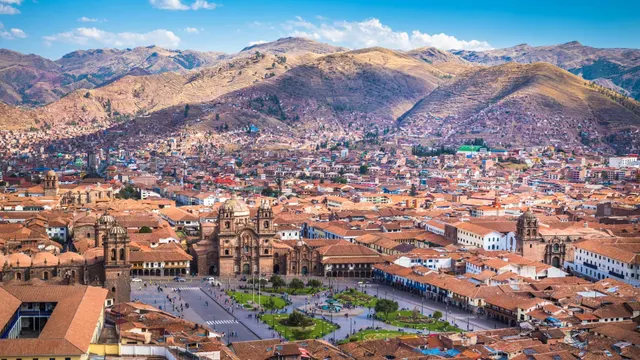
The Cusco Tourist Ticket (Boleto Turístico del Cusco) is a combined pass to 16 archaeological sites and museums in Cusco, the Sacred Valley and the South Valley, grouped into three circuits. The full ticket costs S/ 130 for foreigners and S/ 70 for Peruvians and residents, and it’s valid for 10 days; the partial tickets cover a single circuit. You buy it in person, in Cusco or at the sites themselves, and it doesn’t include Machu Picchu, the Qorikancha temple, the Cathedral or the Maras Salt Mines.
Important: Sacsayhuamán, Pisac, Ollantaytambo, Moray and the rest of the sites in the program don’t sell individual tickets. If you’re going to visit even one of them, you need the Tourist Ticket, full or partial. The only exceptions Cosituc allows are the Centro Qosqo de Arte Nativo and the Monument to Inca Pachacútec.
What it is and who runs it
The ticket is managed by the Comité de Servicios Integrados Turísticos Culturales del Cusco (Cosituc), which splits the revenue among the local municipalities, the regional office of Peru’s Ministry of Culture (Dirección Desconcentrada de Cultura) and the Regional Tourism Office. It’s a named ticket: it carries your name, it can’t be given away or resold, and at every checkpoint you’ll be asked for your ID along with it.
In 2026, Peru passed Law 32586, the New Tourist Ticket Law, which keeps Cosituc as the administrator of the Cusco ticket and provides for the gradual rollout of a digital ticket. As of October 2026, its implementing regulations were still open for public comment, so for now the ticket works the way it always has: you buy it in person and show it at the entrance to each site. If you’re traveling later on, check Cosituc’s official price list before you go.
The ticket doesn’t include a guide or transportation: it only gets you into the places in the program while it’s valid.
Prices and ticket types
There’s one full ticket, which includes all three circuits, and three partial tickets, one per circuit. Each has a rate for foreigners and a promotional rate for Peruvians and residents of Peru. This is the complete table from Cosituc’s official price list, in soles:
| Ticket | Circuits | Valid for | Foreigner | Peruvian or resident |
|---|---|---|---|---|
| Full ticket | I, II and III (16 sites) | 10 days | S/ 130 | S/ 70 |
| Full student ticket | I, II and III (16 sites) | 10 days | S/ 70 | S/ 40 |
| Saqsayhuamán partial ticket | Circuit I | Foreigners: 5 days. Nationals: 1 day | S/ 70 | S/ 40 |
| City and South Valley partial ticket | Circuit II | Foreigners: 2 days. Nationals: 1 day | S/ 70 | S/ 40 |
| Sacred Valley partial ticket | Circuit III | Foreigners: 2 days. Nationals: 1 day | S/ 70 | S/ 40 |
The partial tickets don’t come in a student version: the student rate only exists for the full ticket. Notice, too, that the partial tickets are valid for a shorter time for Peruvian travelers than for foreigners.
Foreigners
You pay the general rate with your passport. There’s no discount for citizens of the Andean Community: unlike the Machu Picchu ticket, the Tourist Ticket only distinguishes between the foreigner rate and the promotional rate for Peruvian travelers. There’s also no discount for buying several tickets, or for teachers with an ITIC card.
Peruvians and residents of Peru
Peruvians pay the promotional rate with their DNI (national ID card). Foreign residents are also entitled to it if they show a valid carné de extranjería (foreign resident card) or permanent residence document. Cosituc calls this rate the “boleto promocional.”
Students and children
- Up to age 9: free.
- Ages 10 to 17: they buy the full student ticket with just their ID (passport or DNI).
- Ages 18 to 25: the full student ticket requires a valid university ID or an ISIC card. The IYTC youth card doesn’t get a discount.
- Over 25: you pay the general rate, even if you’re still a student.
- Centro Qosqo de Arte Nativo: here children pay from age 6, because they take up a seat.
Tip: if you’re between 18 and 25, bring your physical, valid student ID, not a photo of it. With it, the full ticket costs you S/ 70 instead of S/ 130, the same price as a single partial ticket.
The 16 sites included, circuit by circuit
Circuit I: Saqsayhuamán (4 sites)
These are the four Inca sites that ring the city to the north, along the road to Pisac. You can see them together in half a day, on foot, by taxi or on the city tour.
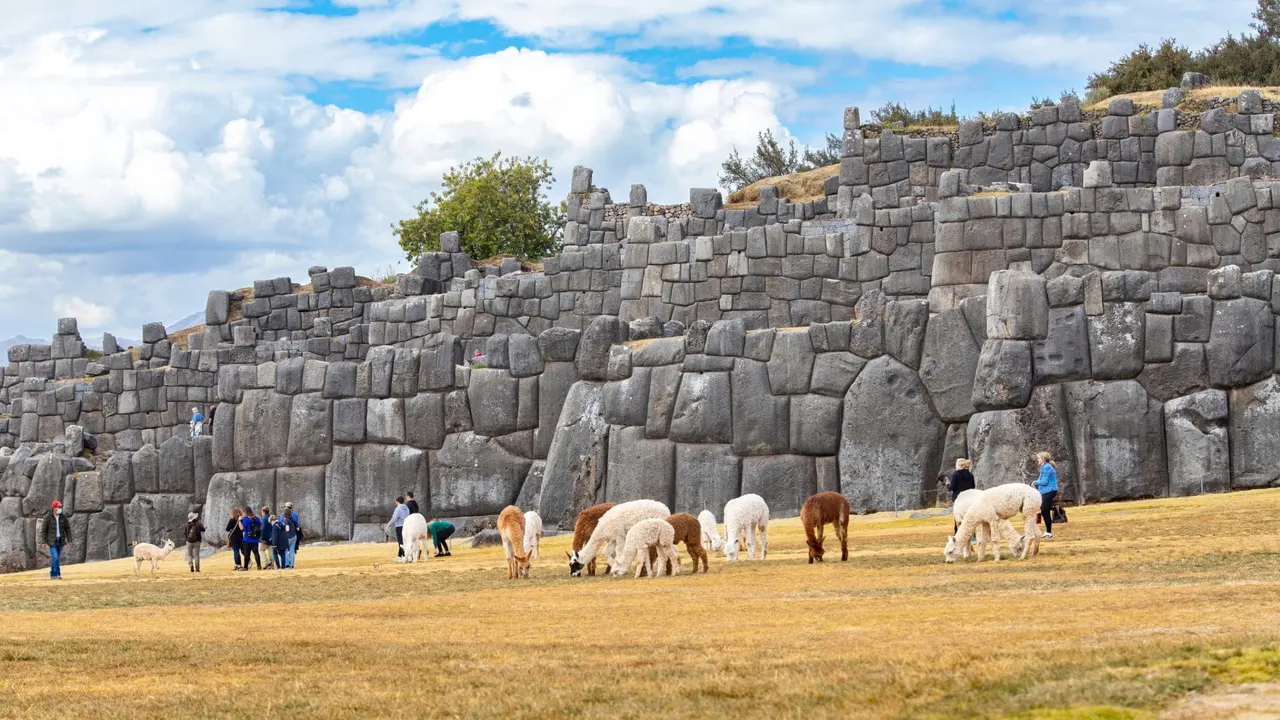
- Sacsayhuamán: zigzag walls made of blocks weighing more than 100 tons, above the city. It’s the main stage of Inti Raymi.
- Qenqo: a carved rock with an underground passage and an altar, about 4 km from the Plaza de Armas.
- Puka Pukara: the “red fortress,” an old checkpoint on the Inca road.
- Tambomachay: Inca fountains and channels where the water still flows, at about 3,765 m. Both are covered in our guide to Tambomachay and Puka Pukara.
Circuit II: City and South Valley (8 sites)
It brings together the museums in downtown Cusco, a dance show and two major archaeological sites in the South Valley, southeast of the city.
- Qorikancha Site Museum: in the gardens below the temple, with pieces found during the excavations. Note: the temple and convent of Santo Domingo, above it, has its own admission fee.
- Regional Historical Museum: in the house where the chronicler Inca Garcilaso de la Vega was born.
- Museum of Contemporary Art: painting and sculpture by Peruvian and Cusco artists.
- Museum of Popular Art: handicrafts and traditional art from the region.
- Monument to Inca Pachacútec: the great statue of the Inca ruler. Along with the Centro Qosqo, it’s the only place that also sells a separate ticket.
- Centro Qosqo de Arte Nativo: traditional dance shows in the evening. For more after-dark plans, see Cusco at night.
- Tipón: terraces with Inca channels and fountains that still work, about 23 km from Cusco.
- Pikillacta: a large city of the Wari culture, which predates the Incas, about 30 km away.
Circuit III: Sacred Valley (4 sites)
The four archaeological parks of the Urubamba Valley and the plateau above it. You can cover them in a full day, or in two if you take it slow.
- Pisac: terraces that step down the mountainside and ceremonial complexes above the valley, about 33 km from Cusco.
- Ollantaytambo: the granite fortress and a town whose Inca streets and channels are still in use, about 72 km away.
- Chinchero: terraces and a colonial church built on Inca walls, at about 3,760 m.
- Moray: the circular terraces on the Maras plateau. The Salt Mines, a few kilometers away, aren’t covered by the ticket. Read our guide to Maras and Moray.
What the Tourist Ticket doesn’t include
These places have their own admission fee, paid separately and almost always at the door:
- Machu Picchu: a Ministry of Culture ticket with a date, entry time and route. The whole system is explained in our guide to Machu Picchu tickets.
- Qorikancha temple: the convent of Santo Domingo charges its own admission. Only the site museum is covered by the ticket.
- Cusco Cathedral: its own admission fee, paid at the door.
- Church of San Blas: part of the Archdiocese’s religious circuit, which has its own ticket.
- Maras Salt Mines: an entrance fee charged by the community, in cash.
- Church of Andahuaylillas: admission through the Andean Baroque Route, even though it’s in the South Valley.
- Raqchi: its own admission fee.
- Rainbow Mountain, Palcoyo and Humantay Lake: community entrance fees, in cash.
Full or partial? Which one is right for you
The math is simple: two partial tickets cost more than the full one. If you’re going to set foot in two circuits, buy the full ticket. For a foreigner, the Saqsayhuamán partial plus the Sacred Valley partial add up to S/ 140, versus S/ 130 for the full ticket, which also adds circuit II and gives you 10 days. For a Peruvian traveler, two partial tickets add up to S/ 80, versus S/ 70 for the full one.
| Your plan in Cusco | Circuits you’ll visit | Best ticket for you | Cost for a foreigner |
|---|---|---|---|
| Only the city tour (Qorikancha, Sacsayhuamán, Qenqo, Puka Pukara, Tambomachay) | I | Saqsayhuamán partial ticket | S/ 70, plus admission to the Qorikancha temple |
| Only the Sacred Valley, on the way to Machu Picchu | III | Sacred Valley partial ticket | S/ 70 |
| Only Maras and Moray | III | Sacred Valley partial ticket | S/ 70, plus admission to the Salt Mines |
| city tour and Sacred Valley | I and III | Full ticket | S/ 130 |
| City, Sacred Valley and South Valley | I, II and III | Full ticket | S/ 130 |
| Only the city museums and the South Valley | II | City and South Valley partial ticket | S/ 70 |
In practice, almost every traveler who spends four days or more in Cusco does the city tour and the Sacred Valley, so the full ticket is the usual purchase. The partial ticket makes sense if you’re just passing through: for example, if you head straight from the airport down to the Sacred Valley and from there take the train to Machu Picchu, as in the 3-day itinerary.
Tip: the Sacred Valley partial ticket covers Moray. If you do the Maras and Moray tour and, on another day within its 2-day validity, the classic Sacred Valley tour, that partial ticket is all you need. If there are more days between them, or if you’re also doing the city tour, the full ticket works out better.
Where and how to buy it
There are no online sales: you always buy it in person. You have two options:
- Cosituc’s main counter: Avenida El Sol 103, Galerías Turísticas, a few minutes’ walk from the Plaza de Armas. It’s open Monday through Sunday, 7:30 a.m. to 6:00 p.m.
- At the sites in the program: at the ticket office of any archaeological site on the ticket, such as Sacsayhuamán, Pisac or Ollantaytambo. It’s not sold at the Regional Historical Museum, the Centro Qosqo de Arte Nativo, the Museum of Popular Art or the Museum of Contemporary Art.
Be wary of websites or resellers offering the Tourist Ticket online: right now, that’s not an official channel.
Step by step
- Decide which circuits you’ll visit and on which days, using the table above.
- Buy the ticket on the same day as your first visit, not before.
- Show your ID and, if applicable, your student ID or carné de extranjería.
- Check that your name and the date are spelled correctly.
- Keep it with your ID: you’ll be asked for both at every site.
Important: the ticket’s validity starts on the day you buy it, not the day you first use it. That’s why Cosituc recommends not buying it in advance. If you buy it the afternoon before you start, you lose one of the full ticket’s 10 days, or half of a 2-day partial ticket.
You don’t need to book ahead, either: unlike the Machu Picchu ticket, the Tourist Ticket has no daily quotas and never sells out. Bring cash in soles in case the ticket office doesn’t take cards.
How to use it on a tour
Before you book a tour, check whether the price includes the Tourist Ticket: some agencies include it and others charge it separately, on city tours, Sacred Valley day trips and Maras and Moray tours alike. On a city tour you’ll also need admission to the Qorikancha temple, and in Maras, to the Salt Mines.
If you’re going with a tour, you can buy the ticket at the Avenida El Sol counter before you’re picked up, or at the ticket office of the first archaeological site on the route. Always ask which admission fees are included in the price when you book.
How to see all 16 sites in three days
Cosituc estimates that the 16 sites can be covered in a minimum of three days. Here’s an organized way to do it with the full ticket:
- Day 1, Cusco: in the morning, the Qorikancha Site Museum, the Regional Historical Museum, the Museum of Contemporary Art and the Museum of Popular Art, all downtown. In the afternoon, Sacsayhuamán, Qenqo, Puka Pukara and Tambomachay. In the evening, the dances at the Centro Qosqo de Arte Nativo.
- Day 2, Sacred Valley: Pisac, Ollantaytambo and Chinchero in a full day.
- Day 3, South Valley and the Maras plateau: Tipón and Pikillacta in the morning, and Moray on a separate half-day outing. If you run out of time, save Moray for another day while the ticket is still valid.
Leave the Monument to Inca Pachacútec for any free moment: it’s a short visit. With 10 days of validity, the full ticket easily covers any weeklong trip. Ideas for each place, with time needed and the best time to go, in things to do in Cusco.
Common mistakes
- Buying it on the day you arrive without using it: the clock on its validity is already running.
- Buying two partial tickets: they almost always cost more than the full one.
- Counting on it for the Cathedral or the Qorikancha temple: they’re not included; bring cash for those admission fees.
- Forgetting your ID: the ticket is in your name, and you’ll be asked for ID at the checkpoints.
- Looking for a “Sacsayhuamán-only ticket”: it doesn’t exist; the minimum is the circuit I partial ticket.
Summary: which ticket to buy for your situation
- You’re doing the city tour and the Sacred Valley: the full ticket, S/ 130 for foreigners or S/ 70 for Peruvians and residents.
- You’re only passing through the Sacred Valley on the way to Machu Picchu: the Sacred Valley partial ticket.
- You only have one afternoon in Cusco: the Saqsayhuamán partial ticket plus admission to the Qorikancha temple.
- You’re a student aged 25 or under with an ID: the full student ticket, S/ 70 for foreigners.
- You’re traveling with kids aged 9 or under: they’re free; from 10 to 17, the full student ticket with their ID.
The next step is fitting the ticket into your days: check the budget for a trip to Cusco and Machu Picchu to add up the rest of your admission fees, and lock in your Machu Picchu date first, since it’s the only thing that sells out.
Frequently asked questions
How much is the Cusco Tourist Ticket?
According to Cosituc’s price list, the full ticket costs S/ 130 for foreigners and S/ 70 for Peruvians and residents. Partial tickets cost S/ 70 and S/ 40, and foreign students pay S/ 70 for the full ticket.
Can you buy the Cusco Tourist Ticket online?
No. You buy it in person, at Cosituc’s counter on Avenida El Sol or at the ticket offices of the sites in the program.
How long is the Cusco Tourist Ticket valid?
The full ticket, 10 days. Partial tickets for foreigners, 2 to 5 days depending on the circuit, and partial tickets for Peruvians, 1 day. Validity starts on the day you buy it.
Can I pay for Sacsayhuamán only?
There’s no individual ticket. The minimum is the circuit I partial ticket, which also includes Qenqo, Puka Pukara and Tambomachay.
Does the Cusco Tourist Ticket include the Qorikancha?
Only the Qorikancha Site Museum, in the gardens. The temple and convent of Santo Domingo charges its own admission fee.
Is there a discount for Andean Community citizens?
No. The Tourist Ticket only has a foreigner rate and a promotional rate for Peruvians and residents of Peru with a carné de extranjería (foreign resident card).
Do kids have to pay for the Tourist Ticket?
Children aged 9 and under are free. From 10 to 17, they buy the student ticket with their ID.
Do tours include the Cusco Tourist Ticket?
It depends on the agency, so ask when you book. Some include it in the price and others charge it separately, along with other fees such as the Qorikancha temple or the Maras Salt Mines.