Key facts
- Machu Picchu is the biggest expense: you add up the entry ticket, the round-trip train, the bus and, if you want one, a guide.
- The full Tourist Ticket costs S/ 130 for foreigners; day trips are priced by each agency, so check which admission fees they include.
- The bus up to the citadel costs US$24 round trip for foreigners; the train varies by date, time and class.
- Bring cash in soles for the Qorikancha, the Cathedral, the Salt Mines and community entrance fees, which aren’t covered by the Tourist Ticket.
- April, May, September and October offer the best balance of weather, price and demand.
- Book your Machu Picchu ticket first, then the train, flights and hotels.
In this guide
- Where your budget goes
- Machu Picchu: the main expense
- Tours and treks: what to check before you pay
- Admission fees in and around Cusco
- Accommodations
- Food
- A sample budget: how to add up 5 days
- When it’s cheapest to travel
- How to save without missing what matters
- Expenses people often forget
- What to book first
- Summary: what budget for your situation
The budget for a trip to Cusco depends mostly on how you get to Machu Picchu, the season and the type of accommodations. Machu Picchu is the biggest expense: on top of the entry ticket you pay for the round-trip train, the bus up and down and, if you want one, a guide. Day trips around the area are priced by each agency, and the full Tourist Ticket costs S/ 130 for foreigners. On top of that come accommodations, food and the admission fees you pay in cash.
As a general reference, PromPerú’s Foreign Tourist Profile estimates that the average foreign visitor spent US$1,232 on their trip through Peru in 2025, not counting international flights, over an average stay of 10 nights. Cusco received 37% of those visitors. Below, we break down each expense so you can work out your own numbers.
Important: Cusco runs on two currencies. Official admission fees, the Tourist Ticket and the markets are paid in soles (S/); trains, the Machu Picchu bus for foreigners and many tours are priced in dollars (US$). In this guide, we keep each price in the currency it’s published in: convert it using that day’s exchange rate.
Where your budget goes
These are the expense categories of a typical trip, with the reference figure we can back up and where it comes from. Anything without a fixed official price is marked as variable.
| Expense | Reference price | Source |
|---|---|---|
| Machu Picchu ticket (Peruvians, residents and Andean Community) | S/ 64 without a mountain; S/ 112 with Machu Picchu Mountain, Huayna Picchu or the Great Cavern | RM 000284-2025-MC, 2026 fares |
| Machu Picchu ticket (foreigners) | Shown on the official website when you choose a date, route and time slot | Tu Boleto, Peru’s Ministry of Culture |
| Aguas Calientes – Machu Picchu bus | US$24 round trip (foreign adult); S/ 15 (Peruvian adult) | PeruRail travel guide; Consettur fares |
| Train to Aguas Calientes | Variable depending on date, time and class | PeruRail and Inca Rail |
| Cusco Tourist Ticket | S/ 130 full ticket (foreigner); S/ 70 (Peruvian or resident) | Cosituc price list |
| Day trips from Cusco | Variable; each agency sets its own price and what’s included | Agencies in Cusco |
| Separate admission fees (Qorikancha, Cathedral, Salt Mines, community fees) | Variable; paid at the door, almost always in cash | Each site’s administrator |
| Accommodations and food | Varies widely with your travel style (see below) | Approximate ranges |
Machu Picchu: the main expense
Going to Machu Picchu on your own means adding up four pieces: the entry ticket, the round-trip train, the bus up and down, and the transfer to the train station. If you want a guide in the citadel, that’s a fifth piece. If you spend the night in Aguas Calientes, add the hotel.
The entry ticket
For Peruvians, foreign residents and citizens of the Andean Community, the 2026 fare is S/ 64 for routes without a mountain and for Huchuy Picchu, and S/ 112 for routes with Machu Picchu Mountain, Huayna Picchu or the Great Cavern. Students and minors pay S/ 32 and S/ 80. For foreigners, the exact price appears on the official website when you choose a date and route: don’t trust figures from old blogs. Who pays what is covered in Machu Picchu ticket types.
The train
This is the most variable piece. The price changes with the date, the time and the class: the economy classes (PeruRail’s Expedition and Inca Rail’s The Voyager) are the cheapest, and the panoramic and luxury classes cost quite a bit more. The most popular departure times go up first. Classes and schedules are in our guide to the train to Machu Picchu.
The bus
The Consettur bus costs US$24 round trip for a foreign adult and US$12 for a child under 12. For Peruvian adults, S/ 15. The route concession is in transition, so confirm the fare when you buy. If you’d rather not pay for it, you can walk up in about an hour and a half.
On your own or with a tour
One-day tours from Cusco usually bundle pickup, the round-trip train, the bus, the entry ticket and a guide; two-day versions add a hotel night in Aguas Calientes and an early visit. Lunch in Aguas Calientes and the routes with a mountain are often left out. Before you pay, compare the price with the sum of each piece booked separately on the same dates, and check which train class and which ticket route are included.
The two upgrades that most change the final figure are the train class, since a panoramic train costs quite a bit more than economy, and a ticket with Huayna Picchu or Machu Picchu Mountain, which has its own fare.
Tip: the cheapest way to get there is the Hidroeléctrica route: about 7 hours by road and 2 h 30 min on foot alongside the railroad tracks. You save on the train, but you spend a whole day getting there and another getting back, and it’s not recommended from November to March because of landslides.
Tours and treks: what to check before you pay
Day trips and treks are sold by many agencies in Cusco, with prices that change with the season, group size and what’s included. Instead of comparing only the headline price, check these points:
- Admission fees: whether the Tourist Ticket, the Qorikancha, the Maras Salt Mines or the community entrance fees for Rainbow Mountain and Humantay are included or paid separately.
- Group or private service: a private service costs more, but lets you set the pace and the stops.
- Meals: full-day trips often include breakfast or lunch, but not always both.
- Extras on the high mountains: the optional horse at Rainbow Mountain or Humantay is usually paid on site.
- Gear on treks: on the Salkantay and the Inca Trail, sleeping bags and trekking poles are often rented as extras, and a personal porter is hired separately.
- Tips: for guides, cooks and porters, they’re almost never included.
Important: the Inca Trail can only be done with an authorized tour agency, and permits are issued in your name. Ask whether the price includes the permit, the Machu Picchu ticket and the return train.
Admission fees in and around Cusco
Besides Machu Picchu, almost every traveler needs the Cusco Tourist Ticket. The full ticket costs S/ 130 for foreigners, S/ 70 for Peruvians and residents, and S/ 70 for foreign students with an ID; it’s valid for 10 days and includes Sacsayhuamán, the Sacred Valley, the South Valley and several museums. The partial tickets, covering a single circuit, cost S/ 70 or S/ 40. If you’re visiting the ruins around the city and the Sacred Valley, the full ticket is cheaper than two partial ones.
Not covered by the Tourist Ticket are admission fees paid on site: the Qorikancha temple, the Cathedral, the Church of Andahuaylillas, the Maras Salt Mines and the community entrance fees for Rainbow Mountain, Palcoyo and Humantay. They don’t share a common official rate and can change without notice; set aside a cash fund, in soles and in small bills, for all of them.
Accommodations
Cusco has it all, from hostel beds to luxury hotels in colonial mansions. The price depends on three factors: the season, the location and the category. These ranges are approximate: they reflect what we usually see, living in Cusco, in the rates of the city’s guesthouses and hotels, per night and in mid-season. In June, July, August and on peak dates they go up, and in the rainy season they go down.
- Bed in a shared hostel dorm: the cheapest option, roughly US$10 to US$25 per person.
- Guesthouse or simple hotel with a private bathroom: roughly US$30 to US$60 for a double room.
- Mid-range hotel (three stars): roughly US$60 to US$120 for a double.
- Boutique or luxury hotel: from about US$150 for a double, with wide variation.
In Aguas Calientes, you’ll normally pay more than in Cusco for the same category, because there’s less on offer and almost everything arrives by train. If you’re staying in the Sacred Valley, you’ll find everything from family-run lodgings to country hotels.
Tip: in Cusco, a location a little farther from the center makes the night cheaper, but watch out for the hills: upper neighborhoods like San Blas or San Cristóbal mean climbing stairs at more than 3,400 m. For the first few days, a hotel on flat ground saves you the effort.
Food
Eating in Cusco can cost very little or quite a lot, depending on where. Without exact figures, because they change often, this is the big picture:
- Markets: San Pedro Market and the neighborhood markets are the cheapest option, with juices, soups and set lunches.
- Menú del día (set lunch): at picanterías and neighborhood restaurants, a set menu with a starter, soup or main course and a drink is the cheapest way to eat lunch outside the market.
- Tourist restaurants downtown: ordering à la carte costs several times as much as a set lunch.
- Chef-driven and Novoandean cuisine: the highest expense, in the historic center and in San Blas.
What to order and where to try it is in our guide to traditional Cusco food. Remember that full-day tours usually include a lunch or breakfast, which also cuts your daily spending.
A sample budget: how to add up 5 days
Take a typical first trip: the Sacred Valley, Machu Picchu, the city with its nearby ruins and Rainbow Mountain. These are the pieces to add up, per person:
- Tourist Ticket: S/ 130 for the full ticket, which covers the valley and the ruins around the city.
- Machu Picchu: the entry ticket at the official fare, the round-trip train in your chosen class and US$24 for the round-trip bus.
- Accommodations: four nights, one of them in Aguas Calientes. In a mid-range hotel, that’s roughly US$240 to US$480 per double room, using the ranges above, plus whatever extra the night in Aguas Calientes costs.
- Day trips: transportation or a tour for the Sacred Valley and Rainbow Mountain, plus the community entrance fee in cash.
- Transfers and food: the airport, the drive to the train station and two or three meals a day.
If you’re considering a multi-day package from an agency, compare it with this sum and check whether flights, the Tourist Ticket and meals are included. The difference between one option and the other usually comes down to the hotel and the train class.
When it’s cheapest to travel
- April, May, September and October: good weather and less demand than June to August. It’s the best balance between price and weather.
- November to March: the rainy season, with cheaper hotels and more availability, in exchange for showers. The Inca Trail closes in February.
- Peak dates, more expensive: Inti Raymi week (June 24), Holy Week, the national holidays (Fiestas Patrias) at the end of July, Christmas and New Year’s.
The month-by-month breakdown is in Cusco weather.
How to save without missing what matters
- Buy the full Tourist Ticket if you’ll visit two circuits, and buy it on the day you start your visits: its validity runs from the day you buy it.
- Choose economy-class trains; the panoramic class is worth more by day and you’ll notice it less on a return trip after dark.
- If you have days to spare, consider the Hidroeléctrica route or the Salkantay, which reaches Machu Picchu without an outbound train.
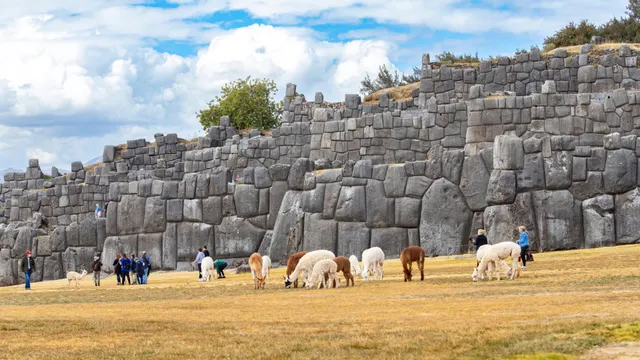
- Explore Sacsayhuamán and the nearby sites on foot with the Tourist Ticket.
- Eat the menú del día (set lunch) at markets and picanterías.
- If you’re a student aged 25 or under, bring your physical ID: the full student Tourist Ticket costs S/ 70 instead of S/ 130. At Machu Picchu, the student rate is for Peruvians, residents and Andean Community citizens.
- Book your Machu Picchu ticket, train and hotel early: in peak season, the cheap options sell out first.
Expenses people often forget
- Admission fees paid in cash: the Qorikancha, the Cathedral, the Salt Mines and community entrance fees.
- Lunch in Aguas Calientes on your Machu Picchu day.
- Tips for guides, cooks and porters on treks.
- The optional horse at Rainbow Mountain or Humantay.
- Trekking gear rental: sleeping bag and trekking poles.
- Travel insurance with medical coverage, highly recommended at a high-altitude destination.
- Domestic flights: the Lima–Cusco leg is usually another major expense, and its price varies a lot depending on how far ahead you book.
Important: carry cash in soles for everything paid at the door and in rural areas, where cards aren’t always accepted. Split your money among several pockets and don’t carry it all on you at the markets.
What to book first
- The Machu Picchu ticket or the Inca Trail permit: it’s what sells out first, and it sets your dates. How to buy it is in our guide to Machu Picchu tickets.
- The train, matched to the time on your ticket.
- Your flights to Cusco.
- Your hotels, especially in Aguas Calientes.
- Day tours, which usually have space with a few days’ notice outside peak dates.
Summary: what budget for your situation
- You’re traveling on a tight budget: a hostel, the menú del día, the full Tourist Ticket, the ruins around the city on foot and Machu Picchu by economy train or via Hidroeléctrica.
- You want a balance: a mid-range hotel, Machu Picchu in one day or with a night in Aguas Calientes, and two or three day trips.
- You’d rather not coordinate anything: a multi-day package from an authorized agency, after checking exactly what it includes.
- You love to hike: the Salkantay or the Inca Trail, the latter only with an authorized agency; ask whether the Machu Picchu ticket is included.
The next step is setting your dates and planning your days: use the 3-, 5- and 7-day Cusco itineraries and add up your own figures with the prices in this guide.
Frequently asked questions
How much money do I need for 5 days in Cusco?
It depends mostly on your hotel and how you get to Machu Picchu. Add up the full Tourist Ticket (S/ 130 for foreigners), the Machu Picchu ticket, train and bus, four hotel nights, day trips, food and the admission fees paid in cash.
How much does it cost to go to Machu Picchu from Cusco?
You need to add up the entry ticket, the round-trip train, the bus (US$24 round trip for foreign adults) and the transfers, plus a guide if you want one. The train is the most variable piece: it changes with the date, time and class.
Is Cusco expensive to visit?
Eating and getting around the city can be cheap, especially at markets and with the menú del día (set lunch). What drives up the cost of the trip is Machu Picchu, hotels in peak season and flights.
Should I pay in soles or dollars in Cusco?
Admission fees, markets and the Tourist Ticket are paid in soles. Trains, tours and the Machu Picchu bus for foreigners are usually priced in dollars.
What is the cheapest way to get to Machu Picchu?
The Hidroeléctrica route: a drive and about 2 h 30 min on foot, with no outbound train. In exchange, it takes a whole day each way, and it’s not a good idea in the rainy season.
When is the cheapest time to travel to Cusco?
From November to March, in the rainy season, hotel prices drop. April, May, September and October combine moderate prices with good weather.
How much does the average foreign tourist spend in Peru?
According to PromPerú’s 2025 Foreign Tourist Profile, about US$1,232 per trip, not counting international flights, over an average stay of 10 nights.
Official sources
- Cosituc: Cusco Tourist Ticket price list
- Tu Boleto (Peru’s Ministry of Culture): official Machu Picchu ticket sales
- El Peruano: RM 000284-2025-MC, promotional fares for the Llaqta of Machupicchu for 2026
- PeruRail: how to plan your trip to Machu Picchu (Consettur bus fares)
- PeruRail: train schedules, classes and fares to Machu Picchu
- Inca Rail: train classes and fares to Machu Picchu
- Forbes Perú: average spending by foreign tourists in 2025 (Foreign Tourist Profile, PromPerú)