Key facts
- There’s no direct road: first you get to Aguas Calientes, and from there you go up by bus (25 to 30 min) or on foot (about 1 h 30 min).
- The train from Ollantaytambo takes 1 h 30 min to 2 h; from Cusco, PeruRail leaves from Poroy, San Pedro or Wanchaq depending on the season.
- From January to April, all PeruRail departures from Cusco are bimodal: a bus to Ollantaytambo or Pachar, then the train.
- The Inca Trail requires a permit in your name, is booked months in advance and closes every February.
- Hidroeléctrica is the cheapest route: about 7 h on the road and a 2 h 30 min hike alongside the tracks.
- Buy your entry ticket first and choose a train that gets you to Aguas Calientes at least one hour before your entry time.
In this guide
- The Journey at a Glance
- By Train: The Most Popular Option
- On Foot via the Inca Trail
- Salkantay, Inca Jungle and Other Treks
- Via Hidroeléctrica, Step by Step
- From Aguas Calientes to the Citadel
- How to Match Your Train to Your Ticket Time
- Day Trip or a Night in Aguas Calientes
- All the Options Compared
- Which Option to Choose Based on Your Travel Style
- Common Mistakes
- Bottom Line: What to Do Based on Your Trip
There’s no direct road from Cusco to Machu Picchu. First you have to reach Aguas Calientes (Machu Picchu Pueblo): by train from Ollantaytambo or Cusco, on foot along the Inca Trail or another trek, or by road to Hidroeléctrica and then on foot. From Aguas Calientes you go up to the citadel by bus, in 25 to 30 minutes, or on foot, in about an hour and a half.
The Journey at a Glance
Every route follows the same pattern: Cusco, a station or starting point, Aguas Calientes and, finally, the citadel. What changes is how you cover the middle stretch.
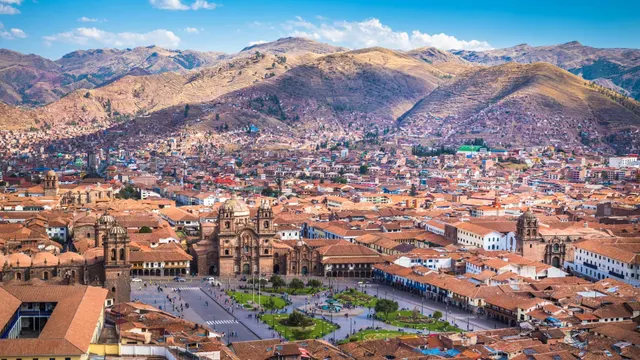
- Cusco → starting point. This can be a train station in Cusco (Wanchaq, San Pedro or Poroy), the Ollantaytambo station in the Sacred Valley, the trailhead of a trek or the road toward Santa María and Hidroeléctrica.
- Starting point → Aguas Calientes. By train, on foot or by combining road and hiking. There’s no road open to traffic between Santa Teresa and Aguas Calientes.
- Aguas Calientes → citadel. About 8 km of winding road covered by the Consettur bus, or a trail of stone steps.
- Entering Machu Picchu. With a ticket that has a date, an entry time and a route. Your whole plan should revolve around that time.
A fact that helps make sense of the trip: Cusco sits at about 3,400 m, Ollantaytambo at 2,792 m, Aguas Calientes at 2,040 m and Machu Picchu at 2,430 m. You’re heading downhill almost the whole way, so the citadel feels easier on the body than Cusco.
By Train: The Most Popular Option
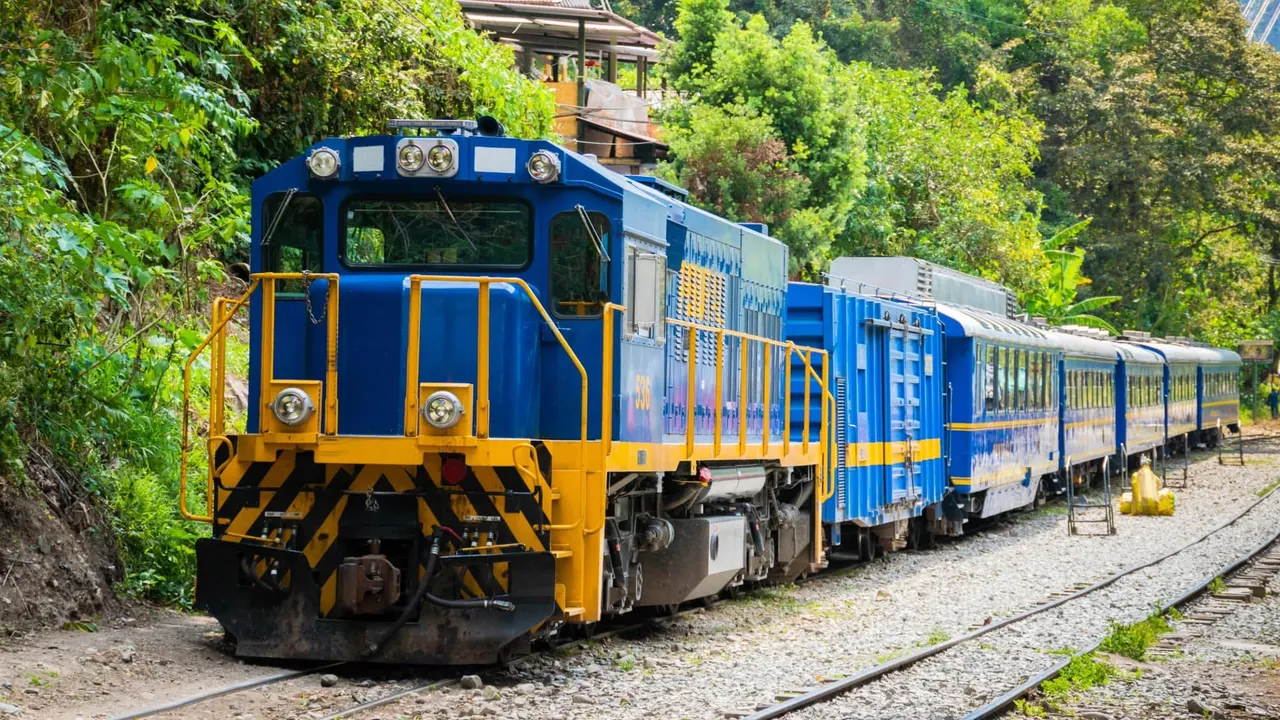
Two companies run trains to Aguas Calientes: PeruRail and Inca Rail. Both depart mainly from Ollantaytambo. If you’re staying in Cusco, you first travel the 72 km to Ollantaytambo by road, in about 1 h 45 min, or book a service that includes that transfer. Full details on classes and schedules are in our guide to the train to Machu Picchu.
Stations and Travel Times
| From | Operator | How it works | Time to Aguas Calientes |
|---|---|---|---|
| Ollantaytambo | PeruRail and Inca Rail | Direct train; this is where most departures leave from | 1 h 30 min to 2 h |
| Poroy (outskirts of Cusco) | PeruRail | Direct train from May to December | About 3 h 30 min |
| San Pedro (downtown Cusco) | PeruRail | Departures from May to December; on the current schedule, they combine bus and train | About 4 h to 4 h 40 min |
| Wanchaq (Cusco) | PeruRail | Bimodal service: bus to Ollantaytambo or Pachar, then train | 4 h to 4 h 40 min |
| Cusco | Inca Rail | Bimodal service: van transfer to Ollantaytambo, then train | Depends on the transfer schedule |
| Hidroeléctrica | PeruRail | Short train, Expedition class only | 40 to 45 minutes |
From January to April, all PeruRail departures from Cusco are bimodal: the bus leaves from Wanchaq station. The rest of the year, the only direct train from Cusco leaves from Poroy: departures from San Pedro and Wanchaq combine a bus leg and a train leg. Since September 1, 2025, some bimodal departures switch from bus to train at Pachar station, before Ollantaytambo. Check your ticket for exactly where your service leaves from.
Train Classes
- Economy: Expedition (PeruRail) and The Voyager (Inca Rail). Large windows and snacks for sale. These are the classes most tours use.
- Panoramic: Vistadome and Vistadome Observatory (PeruRail), The 360° (Inca Rail). Skylight windows, an observation car or an open-air balcony, and snacks included.
- Premium: The Prime (Inca Rail), with its own dining car and priority boarding.
- Luxury: the Hiram Bingham, by Belmond, operated with PeruRail, and Inca Rail’s The First Class, with a multi-course dinner and a bar.
They all take practically the same time. The difference lies in comfort, onboard service and, above all, the schedule that fits your entry time.
How to Book and What Luggage to Bring
- Book on the official websites of PeruRail or Inca Rail, or let your agency coordinate it with your ticket.
- PeruRail recommends booking 2 to 4 weeks in advance, especially from June to August and in December and January.
- Luggage on PeruRail: one backpack up to 8 kg and 100 linear cm, or one carry-on bag up to 12 kg and 115 cm.
- Luggage on Inca Rail: one carry-on bag up to 8 kg and 118 linear cm; there are no luggage racks.
- Your big suitcase stays at your hotel in Cusco or in a luggage storage room. PeruRail offers free luggage storage in Ollantaytambo and in Machu Picchu Pueblo.
Tip: if you’re spending a few days in the Sacred Valley, stay the night before in Ollantaytambo. You’ll have every train departure just minutes away and skip the predawn transfer from Cusco.
On Foot via the Inca Trail
It’s the only way to walk all the way to the citadel and enter through Intipunku, the Sun Gate. Access is regulated: daily permits are limited and issued in each hiker’s name, and only authorized agencies can sell them, using each hiker’s name and passport. More background in our Inca Trail guide.
Classic Inca Trail (4 Days)
It starts at Km 82 (Piscacucho) and covers about 40 km over four days, with three nights of camping. On the second day it crosses the Warmiwañusqa Pass, at 4,215 m, the highest point. Along the way you pass Runkurakay, Sayacmarca, Phuyupatamarca and Wiñay Wayna, and on the fourth day you reach Intipunku before dawn. It’s demanding because of the altitude and the stone stairways.
Short Inca Trail (2 Days)
The train drops you off at Km 104 (Chachabamba). You hike about 12 km in 6 to 7 hours, climb to Wiñay Wayna, reach the Sun Gate in the afternoon and head down to Aguas Calientes for the night. The next day you tour the citadel with a guide. It’s moderately difficult and never goes above 2,720 m. Like the classic route, it can only be done with an authorized tour agency.
Important: the Inca Trail closes every February for maintenance, although Machu Picchu stays open. To travel between May and August, it’s best to book your permit four to six months in advance, and the name on a permit can’t be changed.
Salkantay, Inca Jungle and Other Treks
If you couldn’t get a permit or want a different kind of scenery, there are treks that end in Aguas Calientes without needing a limited permit. Almost all of them come in through the Santa Teresa and Hidroeléctrica area and cover the last stretch on foot alongside the railroad tracks.
Salkantay (5 Days)
It’s the classic alternative to the Inca Trail. It starts in Soraypampa, visits Humantay Lake, crosses the Salkantay Pass at 4,630 m beside the snowcapped peak and descends into the cloud forest among coffee farms. On the fourth day it reaches Hidroeléctrica and walks to Aguas Calientes; on the fifth, it visits Machu Picchu. It’s demanding, but it doesn’t require a permit and it’s cheaper. More details in our Salkantay guide.
Inca Jungle (4 Days)
The sportiest route: a bike descent from the Abra Málaga pass, above 4,300 m, down to Santa María, with optional rafting and ziplining, the Cocalmayo hot springs in Santa Teresa and a hike from Hidroeléctrica to Aguas Calientes. More information in our Inca Jungle guide.
Lares and Choquequirao
Lares, 3 to 4 days long and moderately difficult, is the most cultural trek, with weaving communities and hot springs. Choquequirao is a different story: it’s a separate Inca citadel, a very demanding out-and-back trek, not a route to Machu Picchu. We compare them all in treks to Machu Picchu compared.
Via Hidroeléctrica, Step by Step
It’s the cheapest route if you’re traveling independently, in exchange for a full day of travel. It skips the train from Cusco: you go by road to the hydroelectric plant and walk from there alongside the railroad tracks.
- Cusco → Santa María: bus, about 5 hours on a mountain road, crossing the Abra Málaga pass.
- Santa María → Santa Teresa: shared van (colectivo), about 1 hour.
- Santa Teresa → Hidroeléctrica: shared van (colectivo), about 40 minutes.
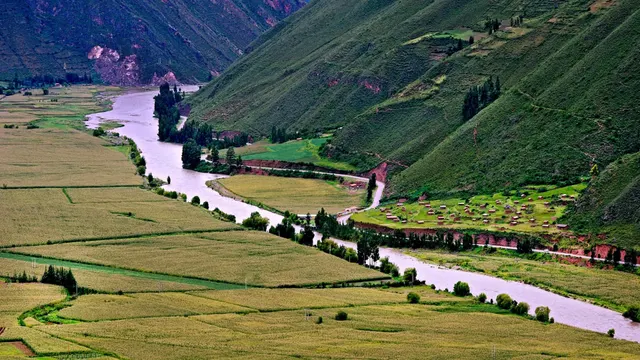
- Hidroeléctrica → Aguas Calientes: about 2 h 30 min on foot on a nearly flat path beside the tracks and the Vilcanota River, or 40 to 45 minutes on PeruRail’s Expedition train.
All in all, that’s about 7 hours on the road plus the hike. You drop from about 3,400 m in Cusco to about 1,890 m at Hidroeléctrica: it’s hot and there are mosquitoes, so bring repellent, water and light clothing. Our guide to the Hidroeléctrica route has reference costs for each leg.
Important: in the rainy season, from November to March, the road to Santa María and Santa Teresa can be hit by landslides. We recommend this route from May to October, and always with licensed transportation companies.
From Aguas Calientes to the Citadel
The last stretch is the same for almost everyone, except those arriving via the Inca Trail. Also check what services the town offers in our Aguas Calientes guide.
By Consettur Bus
It’s run by Consettur, whose concession expired in September 2025: the company keeps operating on an interim basis while a new tender is called, so confirm schedules, fares and ticket offices before you travel. Buses go up from 5:30 a.m. to 3:30 p.m. and come down from 6:30 a.m. to 6:00 p.m., leaving every few minutes depending on demand. The ride takes 25 to 30 minutes. The reference fare for foreign adults is US$24 round trip, according to PeruRail’s guide. You can buy tickets online, at the office on Avenida Hermanos Ayar in Aguas Calientes or at the office on Avenida Pardo in Cusco, and you show them with your passport. All the details are in our guide to the bus to Machu Picchu.
On Foot
A trail of stone steps crosses the road several times on its way to the sanctuary entrance. Plan on about an hour and a half of strenuous, humid climbing. Many travelers take the bus up so they arrive fresh for their entry time, then walk down.
How to Match Your Train to Your Ticket Time
Your Machu Picchu ticket shows a date, an entry time and a route, and it’s the first thing to sell out. That’s why the right order is: ticket, train and, last, hotel. The rule of thumb is to arrive in Aguas Calientes at least one hour before your entry time, to allow for the 25- to 30-minute bus ride and the line.
| Entry time | Which train to take from Ollantaytambo |
|---|---|
| 6:00 to 8:00 a.m. | Spend the night before in Aguas Calientes, or take the first early-morning train (PeruRail’s first departure is at 5:05 a.m. and arrives around 6:40 a.m.) |
| 8:00 to 10:00 a.m. | Trains arriving between 6:40 and 8:30 a.m. |
| 10:00 a.m. to noon | Trains arriving between 8:30 and 10:00 a.m. |
| Afternoon | Trains arriving before noon |
For the return trip, think about how long your route takes. A guided visit on a circuit without a mountain runs about 2 h 30 min; Route 1-A to Machu Picchu Mountain allows up to 7 hours inside, and Huayna Picchu up to 6. Add the bus ride down and leave a comfortable buffer before your return train. If you’re not sure which route to choose, check out the Machu Picchu circuits.
Tip: buy a round-trip bus ticket and don’t book your return train right after your exit time. In peak season, the line for the bus down also gets long by mid-afternoon.
Day Trip or a Night in Aguas Calientes
As a Day Trip from Cusco
It’s doable and very common. A one-day tour picks you up at your hotel between 4:00 and 5:00 a.m., takes the train to Aguas Calientes, rides the bus up, visits the citadel with a guide and returns to Cusco at night: about 16 hours in total. It works well if you’re short on time and a circuit without a mountain is enough for you. For what to see once you’re inside, read our Machu Picchu guide.
With a Night in Aguas Calientes
Staying in town lets you enter in the first time slots, when there are fewer people and better light, climb a mountain without watching the clock and spread the effort over two days. You can use the day you travel in to explore the Sacred Valley and catch the afternoon train. It’s the format we recommend most on a first visit.
All the Options Compared
| Option | Total time from Cusco | Relative cost | Effort | Best for |
|---|---|---|---|---|
| Transfer + train from Ollantaytambo | About 4 h to 4 h 30 min to the entrance | Medium | Low | Most travelers; more schedules available |
| Direct train from Poroy | About 4 h 30 min to the entrance | Medium | Low | Travelers staying in Cusco and visiting from May to December |
| Bimodal service from Cusco | About 4 h 30 min to 5 h to the entrance | Medium | Low | The rainy season or bookings without your own transfer |
| Luxury train (Hiram Bingham, The First Class) | Similar to the regular train | Very high | Low | Special trips and honeymoons |
| Hidroeléctrica route | A full day: about 7 h on the road + 2 h 30 min on foot | Low | Medium | Backpackers with at least two days |
| Short Inca Trail | 2 days, with 1 day of hiking | High | Moderate | Short on time but eager to enter through the Sun Gate |
| Classic Inca Trail | 4 days | Very high | High | The complete Inca experience, booked months ahead |
| Salkantay | 5 days | High | High | High-mountain scenery without a limited permit |
| Inca Jungle | 4 days | Medium | Medium | Adventure and sports |
Times are based on the train operators and our experience on each route; the relative cost compares the options with one another. For specific figures, check our budget for a trip to Cusco and Machu Picchu.
Which Option to Choose Based on Your Travel Style
- You have one or two days: the train from Ollantaytambo or Cusco on a one-day tour. If you can add a night, stay in Aguas Calientes.
- You’re traveling as a family: a morning train, a night in Aguas Calientes and the bus up and down. Avoid the same-day round trip with young children. More tips in Machu Picchu with kids.
- You’re a backpacker: the Hidroeléctrica route, on foot to Aguas Calientes, and the train back if you want to skip the return hike.
- You’re looking for adventure: the Classic Inca Trail if you have a permit; if not, Salkantay or Inca Jungle.
- You want comfort or luxury: a panoramic or luxury train, a hotel in Aguas Calientes and entry in the first time slots.
- First visit without long hikes: train, bus and a classic circuit with a guide.
Common Mistakes
- Buying the train before the ticket. Entry tickets sell out first; without one, the train is useless.
- Not allowing enough time between the train and the entrance. You need at least one hour between arriving in Aguas Calientes and your entry time.
- Mixing up the station. Poroy, San Pedro and Wanchaq are in different parts of Cusco, and Ollantaytambo is almost two hours away. Check your ticket.
- Bringing your big suitcase. Only carry-on luggage is allowed on the train, and at the citadel your backpack can’t be larger than 40 × 35 × 20 cm. See what not to bring to Machu Picchu.
- Forgetting your original passport. It’s checked at the entrance and on the bus; a copy or photo won’t do.
- Planning the Inca Trail in February. It’s closed the entire month.
- Taking the Hidroeléctrica route in the middle of the rainy season without leaving room for landslide delays.
- Thinking you can get there by car. By road, you can only get as far as Ollantaytambo or Hidroeléctrica.
Bottom Line: What to Do Based on Your Trip
If you want the practical route, buy your entry ticket first, then the train from Ollantaytambo, and book a night in Aguas Calientes if you can. If you want to arrive on foot, decide months in advance between the Inca Trail and Salkantay. If you’re on a tight budget with plenty of time, go via Hidroeléctrica in the dry season.
For your entry, start with the ticket and its official site, Tu Boleto, from Peru’s Ministry of Culture. If you’d rather not coordinate the ticket, train, bus and guide separately, many authorized agencies sell one- and two-day trips that bundle them; check what’s included before you pay.
Frequently asked questions
How long does it take to get from Cusco to Machu Picchu?
On the usual route, 4 to 5 hours to the sanctuary entrance, counting the transfer, train and bus. Via Hidroeléctrica it takes a full day.
Can you drive or take a bus from Cusco to Machu Picchu?
Not all the way to the citadel. By road you can only reach Ollantaytambo or Hidroeléctrica; from there you continue by train or on foot to Aguas Calientes.
What is the cheapest way to get to Machu Picchu?
The Hidroeléctrica route: a bus and shared vans (colectivos) to the hydroelectric plant, then a hike alongside the railroad tracks. It saves you the train fare, but it takes a full day of travel.
Is it better to take the train from Cusco or Ollantaytambo?
Ollantaytambo has more departures and a shorter train ride. Leaving from Cusco saves you from arranging the transfer, but only the train from Poroy, from May to December, is direct: departures from San Pedro and Wanchaq include a leg by bus.
Is it worth staying overnight in Aguas Calientes?
Yes, if you want to enter in the first time slots, climb a mountain or travel with kids. A night in town makes the visit much more relaxed.
Can you hike to Machu Picchu without doing the Inca Trail?
Yes. Salkantay, Inca Jungle and the Hidroeléctrica route all end with a hike to Aguas Calientes and don’t require a limited permit.
How far in advance should I book the train to Machu Picchu?
PeruRail recommends 2 to 4 weeks, and even earlier in June, July, August, December and January. Book it once you have your entry ticket.
Official sources
- PeruRail: schedules and frequencies
- PeruRail: bimodal service
- PeruRail: luggage policy
- PeruRail: how to plan your trip to Machu Picchu
- PeruRail: the Hidroeléctrica route
- Inca Rail: how to get to Machu Picchu
- Inca Rail: luggage policy
- Infobae: Consettur keeps operating after the Torontoy contract is annulled (January 6, 2026)
- Tu Boleto (Ministry of Culture): official ticket sales
- Ministry of Culture: circuits and visiting routes
- Ministry of Culture: Machu Picchu code of conduct
- Andina: the Inca Trail closes in February for maintenance