Key facts
- According to the FAO, the guinea pig was domesticated in the Andes between 2,500 and 3,600 years ago and is raised in farmhouse kitchens.
- In Cusco it’s mostly eaten al horno, roasted and stuffed with herbs, or chactado, fried and flattened.
- Tipón, in the South Valley, is the go-to place for roasted cuy, pepián de cuy and cuy chactado.
- Marcos Zapata’s Last Supper, in Cusco Cathedral, shows a roasted guinea pig in the center of the table.
- National Cuy Day is celebrated every second Friday of October under Ministerial Resolution No. 0338-2013-MINAGRI.
- According to the INS, 100 g of cuy meat provides 19 g of protein and 1.6 g of fat; with the skin, fat rises to 16 g or more.
In this guide
- What is cuy?
- The history of cuy in the Andes: from before the Incas to today
- Cuy in Cusco culture: festivals and the Cathedral’s Last Supper
- How cuy is prepared: roasted, chactado and other styles
- Where to eat cuy in Cusco
- How to eat cuy and what to expect
- National Cuy Day: when is it?
- Nutritional value of cuy
- Tips for eating cuy without problems
- Summary: the essentials of cuy in Cusco
Cuy is an Andean rodent, the same animal known elsewhere as the guinea pig. In Cusco it has been raised at home for centuries and is eaten on special occasions. The most typical way to have it is cuy al horno, roasted whole and stuffed with herbs; it’s also served chactado, meaning fried and flattened. The best-known place to try it near the city is Tipón, in the South Valley. You eat it with your hands, it’s usually shared, and it’s best to order it well cooked at a busy place.
For many travelers, trying cuy is the most talked-about food experience of the trip. For people in Cusco it’s more of an everyday thing: the dish of festivals, family lunches and important guests. Here, from Cusco, I explain where it comes from, how it’s prepared, where to eat it without any hassle and what the official data says about its nutritional value.
Important: Cusco sits at about 3,399 m, and during the first few days many people have less of an appetite or a sensitive stomach. Roasted or fried cuy is a heavy dish, with crispy skin and fat. Save it for when you’re acclimatized and start with soups and light dishes. More details in our guide to altitude sickness in Cusco.
What is cuy?
Cuy (Cavia porcellus), also called cobayo or curí in Spanish, is a rodent native to the Andean region of Peru, Bolivia, Ecuador and Colombia, according to the FAO. In English it’s the guinea pig. In Europe or the United States it’s a pet; in the Andes it is, above all, an animal raised for food.
Peru is the country with the most guinea pigs and where the most are eaten. According to data from the 2024 National Agricultural Survey (ENA) published by the official newspaper El Peruano on National Cuy Day 2026, the country has about 24 million cuyes and more than 833,000 producers, and it produces around 22,000 tons of meat a year. Cuy farming is found in 20 departments, and Cusco is among those where it’s most widespread, along with Cajamarca, Áncash, Apurímac and Junín, among others. Half of all producers live between 2,500 and 3,500 m above sea level.
Besides the cuy raised in country homes, there are now improved breeds. The National Small Animals Program of INIA, Peru’s state agricultural research institute, recognizes the Perú, Andina and Inti breeds plus a crossbred one. The Perú breed, for example, grows fast and reaches one kilo in about eight weeks.
The history of cuy in the Andes: from before the Incas to today
Cuy was eaten in the Andes long before the Inca Empire existed. In its manual on guinea pig production, the FAO notes that the existing evidence shows it was domesticated between 2,500 and 3,600 years ago. At the temple of Cerro Sechín, in northern Peru, archaeologists found abundant deposits of guinea pig droppings. The huacos, or ceramic vessels, of the Mochica and Vicús cultures depict it, and in ancient South American tombs guinea pig skins and bones have been found buried alongside human remains.
An animal that lives in the kitchen
Family-scale raising is still the most common method in the Peruvian highlands, and it works almost the same way it did centuries ago. The FAO describes it like this: the animals are normally kept in the kitchen, where the heat of the stove protects them from sudden temperature changes, and they are fed with weeds, crop residues and kitchen scraps. If you step into a farmhouse in the South Valley or the Sacred Valley, it’s normal to see guinea pigs scurrying around by the hearth.
Traditional medicine and rituals
Cuy was never just food. The same FAO publication notes that it is also used in traditional medicine and in magical-religious rituals. That importance now has legal backing: Law 28477, from 2005, lists the cuy among the native livestock species declared Natural Heritage of the Nation.
Cuy in Cusco culture: festivals and the Cathedral’s Last Supper
In Cusco, cuy is celebration food. One of the dishes where it shows up most is chiri uchu, an ancestral dish that, according to the Andina news agency, includes cuy, tortilla, hen, cheese, rocoto pepper, yuyo (a seaweed), fish roe, sangrecita (cooked blood) and toasted corn, and is served at patron saint festivals and in June, Cusco’s jubilee month. If you’re coming for Inti Raymi, that’s the time to look for it.
The guinea pig at the Last Supper
The most famous image of cuy is in Cusco Cathedral, on the Plaza de Armas. Its most celebrated canvas is a Last Supper by the Cusco painter Marcos Zapata. In the center of the table of Christ and the apostles sits a roasted guinea pig on a platter, and you can also see papayas and rocoto peppers. It’s one of the clearest examples of how Cusco’s colonial art brought Andean foods into Christian scenes.
To see the painting you have to go inside the Cathedral, which has its own admission fee. How to fit it into your walk around the historic center is covered in our guide to things to do in Cusco, and there’s more about the city in our guide to Cusco.
How cuy is prepared: roasted, chactado and other styles
In Cusco you’ll mainly find two preparations: roasted and chactado. The rest of Peru has many more, and some of them also appear on Cusco menus.
Cuy al horno (roasted guinea pig)
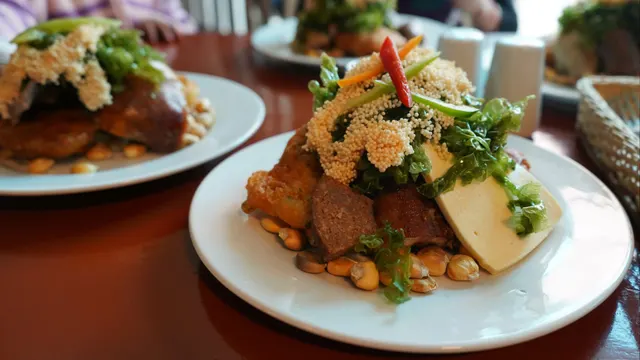
This is the classic Cusco preparation. The cuy is seasoned, stuffed with Andean aromatic herbs such as huacatay, and roasted whole, often in a wood-fired oven, until the skin turns golden and crisp. It’s served with potatoes and, depending on the place, with rocoto relleno (stuffed hot pepper), tamal or salad. In Tipón it’s the star dish.
Cuy chactado (fried guinea pig)
This is fried cuy. It’s served whole, fried in plenty of oil and accompanied by boiled potatoes, salad and toasted or boiled corn. The name comes from the way it’s cooked: the guinea pig is flattened while it fries, traditionally under the weight of a stone, so it cooks evenly. It ends up crunchier and drier than roasted cuy. Tipón makes it too, along with pepián de cuy.
Other preparations
Pepián de cuy is a stew with a thick sauce. Picante de cuy, with a chili pepper sauce and rice, is so common that it appears in the official food composition tables of Peru’s National Institute of Health. In the central highlands, especially in Junín, people also eat guinea pig broth, cuy colorado at fairs and patron saint festivals, pachamanca de cuy and modern versions such as cuy broaster, breaded and fried like fried chicken.
| Preparation | What it is | Served with | Where or when |
|---|---|---|---|
| Cuy al horno | Whole, stuffed with herbs, roasted until the skin is golden | Potatoes and house sides | Tipón, the South Valley and Cusco picanterías |
| Cuy chactado | Whole, fried in plenty of oil and flattened | Boiled potatoes, salad and corn | Tipón and picanterías |
| Pepián de cuy | Guinea pig stew in a thick sauce | Depends on the place | Tipón |
| Chiri uchu | Cold dish with cuy, hen, tortilla, cheese, rocoto and toasted corn | All on one plate | Patron saint festivals and June |
| Picante de cuy | Guinea pig in chili pepper sauce | Rice | Picanterías and set menus |
| Pachamanca de cuy | Cooked underground with hot stones | Fava beans, potatoes and humitas | Central highlands and festivals |
| Caldo de cuy | Soup with pieces of guinea pig | On its own, as a starter | Central highlands |
Where to eat cuy in Cusco
We won’t give you restaurant names: they change a lot, and what’s useful is knowing where to go and what kind of place to look for.
Tipón, the guinea pig town
Tipón is a small town in the district of Oropesa, in the province of Quispicanchi, on the road that heads southeast out of Cusco. The Andina news agency describes it as the place to savor cuy al horno and other guinea pig dishes, such as pepián and cuy chactado. Many Cusco families make a habit of going there to eat it.
It’s worth pairing lunch with the Tipón archaeological site, famous for its Inca terraces and water channels. Everything you need to visit it is in our guide to Tipón.
The South Valley food route
Tipón is part of a classic route for people from Cusco. Before it comes Saylla, known for its chicharrón, and right next door is Oropesa, known for its pan chuta bread. With half a day and transportation you can try all three and add an archaeological site. Read our guide to the South Valley of Cusco to plan the route.
In the city of Cusco
If you don’t have time to leave the city, there are picanterías and traditional restaurants that serve it, both in the historic center and in the neighborhoods. Some Novo-Andean restaurants serve it in pieces, a good option if seeing it whole puts you off.
At the fairs
Around National Cuy Day there are producer fairs. In 2024, for example, Agro Rural, a program of the Ministry of Agrarian Development and Irrigation (Midagri), organized the Inka Cuy fair in Cusco, with local producers and hundreds of guinea pig dishes.
How to eat cuy and what to expect
The first surprise is the presentation. Cuy usually arrives at the table whole, with its head and feet, splayed open on the plate. It’s not a joke for tourists: that’s how it’s served in homes too.
- Size: according to El Peruano, a live cuy weighs about 850 g on average and its carcass about 650 g. It has a fair amount of bone and not much meat per piece, so many people share one between two, with the sides.
- With your hands: that’s the normal way to eat it. Cutlery helps at the start, but the meat close to the bone is eaten with your fingers. Ask for extra napkins.
- Cut up: if you don’t want to see it whole, ask for it to be served in pieces. Many places are happy to do it.
- Taste and texture: the meat is dark and delicate, with a flavor many people compare to rabbit. The most prized part is the skin, crisp in roasted cuy and even crunchier in chactado.
- Price: it usually costs more than other traditional dishes because you’re served the whole animal. For reference, a live cuy already costs between S/ 25 and S/ 30, according to El Peruano. At the restaurant, ask first whether the price is for a whole cuy or a half.
National Cuy Day: when is it?
Peru has a day dedicated to the guinea pig. Ministerial Resolution No. 0338-2013-MINAGRI, dated September 13, 2013, established National Cuy Day, to be celebrated every second Friday of October. According to El Peruano, the goal is to revalue, promote and spread the consumption of cuy in Peru and abroad.
- 2026: it was celebrated on Friday, October 9.
- 2027: it will be on Friday, October 8.
- What happens that day: producer fairs, contests and guinea pig dishes in several regions, with Agro Rural, the Midagri program, among the organizers.
If you’re in Cusco on those dates, ask about fairs in the city and the surrounding districts: it’s the best chance to try several preparations at once.
Nutritional value of cuy
Guinea pig meat has a reputation for being very nutritious, and the official data partly backs this up. According to the Peruvian Food Composition Tables of the National Institute of Health (INS), 100 g of cuy meat provides 96 kcal, 19 g of protein and just 1.6 g of fat. It’s a lean meat, comparable to lean beef. But keep in mind: the skin changes the numbers a lot, and roasted or chactado cuy is eaten with the skin on.
| Food (100 g, according to the INS) | Energy | Protein | Fat | Iron |
|---|---|---|---|---|
| Cuy, meat | 96 kcal | 19.0 g | 1.6 g | 1.9 mg |
| Cuy, leg with skin, raw | 219 kcal | 16.6 g | 16.0 g | 1.6 mg |
| Cuy, breast with skin, raw | 269 kcal | 16.0 g | 18.7 g | 1.0 mg |
| Chicken, lean meat | 119 kcal | 21.4 g | 3.1 g | 1.5 mg |
| Beef, lean meat | 105 kcal | 21.3 g | 1.6 g | 3.4 mg |
| Pork, boneless meat | 198 kcal | 14.4 g | 15.1 g | 1.3 mg |
In short: guinea pig meat is high in protein and low in fat, but it doesn’t beat chicken or beef for protein, and with the skin and frying it’s no longer a light dish. Enjoy it for what it is: a festive dish.
Tips for eating cuy without problems
- Choose busy places. Where lots of Cusco families eat, the cuy comes out of the oven constantly and isn’t reheated.
- Order it well cooked and hot. The meat should be cooked through to the bone. If you see pink parts, ask for it to go back in the oven.
- Be careful with raw sides. During your first days, choose the potatoes and corn over raw salads, and drink bottled water.
- Share it. Half a cuy per person is a generous portion, especially at altitude.
- Ask about the heat. The rocoto and chili sauces that come with it can be very spicy.
- Respect the tradition. For many families this is an important dish. If you don’t like it, that’s fine, but avoid making jokes at the table.
Tip: if you go to Tipón, have lunch early. At midday the ovens are in full swing and the cuy comes out freshly made; by mid-afternoon, some places have already run out. Afterward, visit the archaeological site and walk off your meal among the terraces.
If you’re vegetarian or don’t want to try it
You don’t have to eat cuy to get to know Cusco cooking. Order kapchi, corn with cheese, quinoa soup or dishes with tarwi. And if you eat meat but cuy doesn’t appeal to you, chicharrón, adobo and lechón are just as traditional. You’ll find them all in our guide to traditional Cusco food.
Summary: the essentials of cuy in Cusco
- What it is: an Andean rodent domesticated between 2,500 and 3,600 years ago, according to the FAO, raised in homes and eaten at celebrations.
- How to order it: al horno, the Cusco version, or chactado, fried and crunchy.
- Where: Tipón, in the South Valley, is the go-to place; in the city, try picanterías and traditional restaurants.
- Culture: it appears in festival chiri uchu and in Marcos Zapata’s Last Supper in Cusco Cathedral.
- Its day: the second Friday of October, under Ministerial Resolution No. 0338-2013-MINAGRI.
- Nutrition: 19 g of protein and 1.6 g of fat per 100 g of meat, according to the INS; with the skin, much more fat.
- Tips: after you’ve acclimatized, at a busy place, well cooked and shared.
If you’re planning your trip, set aside half a day for the South Valley and its cuy in our Cusco itineraries for 3, 5 and 7 days, and round out your list of dishes with our guide to traditional Cusco food.
Frequently asked questions
What is cuy?
Cuy is the Spanish name for the guinea pig, a rodent native to the Andes of Peru, Bolivia, Ecuador and Colombia. In Peru it has been raised for food for thousands of years.
Where can you eat guinea pig in Cusco?
The best-known place is Tipón, in the district of Oropesa in the South Valley, famous for its roasted cuy. In the city, picanterías and traditional restaurants also serve it.
What’s the difference between cuy al horno and cuy chactado?
Cuy al horno is stuffed with herbs and roasted whole until the skin turns golden. Cuy chactado is fried whole in plenty of oil while being flattened, so it comes out crunchier.
What does guinea pig taste like?
The meat is dark and delicate, with a flavor many people compare to rabbit. The most prized part is the crispy skin. It has a fair amount of bone and is eaten with your hands.
When is National Cuy Day in Peru?
Every second Friday of October, under Ministerial Resolution No. 0338-2013-MINAGRI. In 2027 it falls on Friday, October 8.
How much protein does guinea pig meat have?
According to the tables of Peru’s National Institute of Health, 100 g of cuy meat has 19 g of protein, 1.6 g of fat and 96 kcal. Pieces with the skin on have much more fat.
Is it safe to eat guinea pig in Cusco?
Yes, if you order it at a busy place, well cooked and hot. During your first days at altitude it’s best to wait until you’re acclimatized, because it’s a heavy dish.
Where is the Last Supper painting with a guinea pig?
In Cusco Cathedral, on the Plaza de Armas. It’s a canvas by the Cusco painter Marcos Zapata, with a roasted guinea pig on a platter in the center of the table.
Official sources
- National Institute of Health (INS): Peruvian Food Composition Tables repositorio.ins.gob.pe
TipónSouth Valley of CuscoCusco

How we put this guide together
Written by Paul Pumalloclla · 17 years in tourism
- Official sources Prices, opening hours and rules checked against Peru’s Ministry of Culture, SERNANP, PromPerú and the train and bus operators.
- Sources cited Every guide links to the sources we used at the end.
- Always up to date When a rule changes, we update the guide and its date.
We’re not a travel agency: we don’t sell tours or take bookings. If a link belongs to a commercial partner, we label it next to the link, and that never changes the facts or the recommendations.
Guide history
- Published
- Last reviewed
Spotted something out of date?
Let us know and we’ll check it against the official source.
Report a change