Key facts
- In Peru the coca leaf is legal for traditional use; ENACO is the only state company authorized to sell it.
- According to INEI and DEVIDA, about 3.46 million Peruvians bought coca leaves for traditional use in 2013.
- A study of 142 students in Cusco concluded that drinking coca tea did not reduce the risk of altitude sickness.
- A single cup of coca tea can cause a positive urine test for cocaine for at least 20 hours.
- The coca leaf is on Schedule I of the 1961 UN Single Convention: don’t take it abroad in any form.
- What works against soroche is gradual acclimatization, no alcohol for the first 48 hours and, with a prescription, acetazolamide.
In this guide
- What is the coca leaf?
- Traditional uses in the Andes: chewing, offerings and exchange
- Coca leaf vs. cocaine: not the same thing
- Coca tea in Cusco: how to drink it
- Does coca tea work for altitude sickness? What the evidence says
- Possible effects of coca tea and drug tests
- Is the coca leaf legal in Peru?
- Can you take coca leaves out of Peru?
- Can you…? Quick answers about coca
- Where to see the coca leaf in Cusco
- Summary: the essentials about the coca leaf
The coca leaf is a sacred Andean plant that people in Cusco chew (a practice called chacchado), offer to the Pachamama and drink as an infusion: the famous coca tea, or mate de coca. In Peru it’s legal for traditional use, but it isn’t cocaine and it isn’t a proven remedy for altitude sickness: a study of travelers in Cusco found that coca tea did not lower the risk. And don’t take it home: the coca leaf is on Schedule I of the 1961 UN Single Convention, and most countries ban its import.
Here in Cusco we see it every day. It’s in the markets, in farmers’ bags and at the front desk of almost every hotel, next to the hot-water flask. This guide explains what it is, how it’s really used in the Andes, what the science says about altitude, what happens with drug tests and why it shouldn’t travel in your suitcase.
What is the coca leaf?
Coca is a shrub of the genus Erythroxylum. The species sold by ENACO, Peru’s state coca company, is Erythroxylum coca, which grows in the warm valleys on the Amazon slopes of the Andes, not in the city of Cusco. What reaches the markets are its dried leaves, green and oval-shaped.
The leaf contains fiber, essential oils, minerals and up to 15 different alkaloids. One of them is cocaine, in a small proportion: the analyses cited in Irmgard Bauer’s 2019 scientific review put it at between 0.13% and 0.68% of the leaf. For decades the leaf was hailed as a “superfood”; the same review notes that later studies did not confirm clear nutritional benefits.
Its use is far from marginal. According to the 2013 National Household Survey on Coca Leaf Consumption by INEI and DEVIDA, about 3.46 million Peruvians, 14.4% of the population studied, bought coca leaves for traditional use. Nearly seven in ten lived in the highlands.
Traditional uses in the Andes: chewing, offerings and exchange
To understand coca, you have to see it in the daily life of Andean communities. It’s not a drink for tourists: it’s work, ritual and a way of relating to others.
Chacchado, or acullico
In Peru, chewing coca is called chacchar, or chacchado; in other parts of the Andes, such as Bolivia and northern Argentina, it’s called acullico. It isn’t really chewed like gum. The leaves go into the mouth one by one, the tongue shapes them into a wad, and saliva moistens it for a long time. Many people add a little llipta, a paste of plant ash and lime.
According to the INEI survey, in the highlands the main reason for buying coca is to chew it during farm, community, construction or craft work, followed by sharing it with laborers and day workers. Chewing also set the pace on the trail: a “cocada,” the time a wad of coca lasts in the mouth, was used as a measure of walking time.
Offerings to the Pachamama and the apus
Coca is at the heart of the despacho, or payment to the earth, the offering made to the Pachamama, Mother Earth, and to the apus, the mountain spirits. The person leading the ritual picks out perfect leaves, usually in threes, and offers them by blowing gently on them: this is the k’intu. Then they are placed on the altar with sweets, seeds and other gifts, and at the end everything is burned and the ashes are buried.
Coca is also “read.” The specialist drops the leaves and looks at how they land: according to priest Luis Dalle, who described a despacho in the journal Allpanchis in 1969, a leaf that lands with its dark green side up is a sign that the Pachamama accepts the offering. Dalle documented this ritual in the countryside of Cusco, Apurímac and Puno, where it is still alive.
Exchange and reciprocity
Sharing coca is a form of greeting and respect. It’s offered to those who help with communal work, brought to wakes and handed around at gatherings, and turning it down without reason can be seen as a snub. Wakes, masses and burials are, in fact, among the main reasons for buying coca in the INEI survey.
Tip: if someone in a rural community offers you coca, you can accept a few leaves, say thank you and keep them or try a little. If you’d rather not, a polite refusal with a smile is enough. Nobody expects a visitor to know how to chew coca.
Coca leaf vs. cocaine: not the same thing
This is the most common confusion. The coca leaf is a plant; cocaine is a substance obtained from it through a chemical extraction process. Chewing the leaf or drinking it as tea is not the same as taking purified cocaine: the amount of alkaloid is much smaller and it’s released slowly.
The problem, for international treaties, is that cocaine can be extracted from the leaf. In December 2025 the WHO Expert Committee on Drug Dependence completed a critical review of the coca leaf. It concluded that traditional chewing and tea drinking do not pose major public health risks, but recommended keeping the leaf on Schedule I of the Single Convention precisely because cocaine can easily be extracted from it. National exemptions for traditional use, such as Peru’s, remain unaffected.
Coca tea in Cusco: how to drink it
Mate de coca is an infusion of coca leaves. In Cusco you’ll be offered it when you arrive at your hotel, at breakfast and in many homes. It has a mild, herbal and slightly bitter taste.
- With loose leaves: put a few dried leaves in a cup and cover them with freshly boiled water. Whole leaves release their flavor slowly: let them steep for several minutes.
- With tea bags: they contain crushed leaves and color the water faster. One bag per cup and a few minutes of steeping.
- With sugar or honey: sweeten it to taste.
- How many cups: there’s no standard dose. Drink it like any herbal tea, in moderation.
Longer steeping extracts more alkaloids. In the analysis by Jenkins and colleagues (1996), one bag of Peruvian coca tea produced an infusion with about 4 milligrams of cocaine on average, and a longer steeping time increased the amount.
Does coca tea work for altitude sickness? What the evidence says
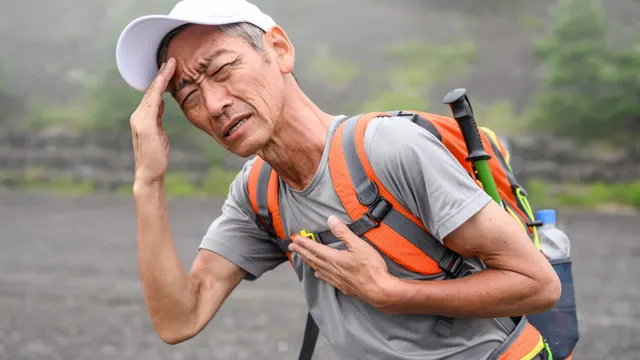
The honest answer: there’s no evidence that it prevents soroche. It’s a deep-rooted custom, a pleasant hot drink and a good excuse to hydrate and rest, but it’s no substitute for acclimatization.
- The most direct study was done in Cusco. Caravedo and colleagues followed 142 newly arrived foreign students. Of these, 39% got acute mountain sickness and 34% drank coca tea to prevent it. Their conclusion: drinking coca tea did not reduce the risk. Acetazolamide, a prescription drug, on the other hand, was linked to fewer cases (Journal of Travel Medicine, 2022).
- There are no clinical trials. Bauer’s 2019 review points out that there are no efficacy studies of coca against altitude sickness, and that survey studies can’t tell whether people took it for prevention or once they already had symptoms.
- Medical guidelines don’t recommend it. The U.S. CDC’s guidance on high-altitude travel doesn’t mention coca among its prevention or treatment measures.
What actually works against soroche
What the CDC recommends for high-altitude travel is simple and works better than any tea:
- Go up gradually. The CDC advises against going from low altitude to sleeping above 2,750 m in a single day. Since Cusco sits at about 3,399 m and almost everyone arrives by plane, it’s a good idea to spend your first nights in the lower Sacred Valley.
- No alcohol for the first 48 hours and only light exercise during those days.
- If you usually drink coffee, keep drinking it: that way you avoid a withdrawal headache that can be mistaken for soroche.
- Ask your doctor about acetazolamide before your trip. It’s a prescription drug, and the doctor decides whether you need it and at what dose.
- Save the highest places for last, such as Rainbow Mountain, once you’ve had a few days to acclimatize.
The full plan, with symptoms, warning signs and day-by-day acclimatization, is in our guide to altitude sickness in Cusco.
Possible effects of coca tea and drug tests
The leaf’s effect is a mild stimulant, and in 2025 the WHO concluded that traditional chewing and tea drinking do not pose major public health risks. In a survey of travelers cited by Bauer, 19% reported discomfort such as nausea or stomach pain, although it couldn’t be determined whether it was due to coca, altitude, travel or food.
What has been proven is that coca tea can cause a positive drug test. When you drink it, your body excretes benzoylecgonine, the main metabolite of cocaine, which is exactly what urine tests look for. In the Jenkins study, a person who drank a single cup of Peruvian coca tea had benzoylecgonine in their urine for at least 20 hours. In another case studied by Turner and colleagues (2005), the test came back positive between 2 and 24 hours after drinking it. Chewed leaves also contain cocaine, so the risk is the same.
Important: if you’re an athlete subject to anti-doping controls, a pilot, in the military or in a job with drug testing, avoid coca in all its forms during your trip: tea, leaves, candy and flour. There also isn’t enough research on pregnancy, breastfeeding, young children or people with high blood pressure or heart problems: in those cases, check with your doctor first.
Is the coca leaf legal in Peru?
Yes, for traditional and lawful use. Buying coca leaves at a market, chewing them or drinking coca tea in Cusco is legal and completely normal. What the state controls is its trade, because cocaine can be extracted from the leaf.
That legal trade goes through the Empresa Nacional de la Coca (ENACO), the National Coca Company, which reports to Peru’s Presidency of the Council of Ministers. In its own words, it is the only Peruvian state company authorized to collect, process and sell the coca leaf and its derivatives, and its main role is to meet the legal demand, both for traditional use, chewing or chacchado, and for industry. Its headquarters are in San Sebastián, in the city of Cusco.
The international framework recognizes this use. The 1988 UN Convention against Illicit Traffic asks that measures against illicit cultivation take due account of traditional lawful uses where there is historical evidence of them, as there is in the Andes.
Can you take coca leaves out of Peru?
No. This is the most important part of this guide. The 1961 Single Convention on Narcotic Drugs defines the “coca leaf” as any leaf of the coca bush from which the alkaloids have not been removed, and lists it on Schedule I, the same as cocaine. Outside the Andean countries that recognize its traditional use, most countries treat it as a controlled narcotic: carrying it in your luggage can lead to seizure, a fine or criminal charges.
A concrete example: in the United States, the federal controlled substances regulation (21 CFR 1308.12) places coca leaves and “any preparation” of them on Schedule II. The only exceptions are decocainized coca leaves and extracts that contain no cocaine or ecgonine. The coca tea bags sold in Peru are not decocainized: the Jenkins study found cocaine in them.
Important: don’t bring back leaves, tea bags, candy, cookies, chocolates or coca flour, even if they’re packaged and labeled in Peru and sold to you as souvenirs. The rules vary from country to country, and the countries where you have layovers count too. If you have any doubts, check the official customs website of your destination country before buying.
Can you…? Quick answers about coca
| Question | Answer | Source |
|---|---|---|
| Drink coca tea in Cusco? | Yes, it’s legal and common in hotels and homes. | ENACO |
| Chew coca leaves in Peru? | Yes, it’s a recognized traditional use. | ENACO; INEI and DEVIDA |
| Use it to prevent soroche? | There’s no evidence it works; acclimatization does. | Caravedo et al., 2022; CDC |
| Can it cause a positive drug test? | Yes, even after a single cup. | Jenkins et al., 1996; Turner et al., 2005 |
| Is it the same as cocaine? | No: cocaine is extracted from the leaf through a chemical process. | WHO, 2025 |
| Pack it in your suitcase to take home? | No: it’s on Schedule I of the 1961 Single Convention and most countries ban it. | 1961 Single Convention |
| Bring coca candy or flour? | No: in the U.S., for example, the ban covers any preparation of the leaf. | 21 CFR 1308.12 |
| Drink it while pregnant or with heart problems? | There isn’t enough data: ask your doctor. | WHO; Bauer review, 2019 |
Where to see the coca leaf in Cusco
- At the food markets: markets are one of the main places where coca leaves are bought in Peru. In Cusco you’ll see stalls with sacks of leaves, llipta and tea bags, next to the herbs and fruit. Ask before taking photos.
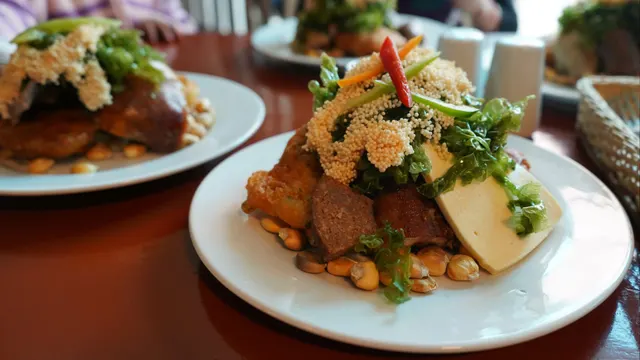
- At your hotel breakfast: there’s almost always a flask of hot water and coca leaves or tea bags for guests.
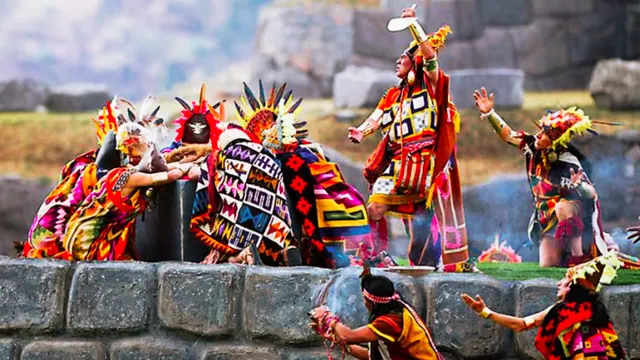
- At Inti Raymi: every June 24, during the Plaza de Armas segment, a coca leaf ceremony is reenacted.
- On treks: on routes such as the Inca Trail, it’s common to see porters and muleteers chewing coca on the climbs.
- At offerings: in the countryside and at some Andean ceremonies, despachos with coca k’intus are still made. If you’re invited, watch respectfully and ask before filming.
If you’d like to try other traditional drinks, our guide to traditional Cusco food includes mate de muña, an Andean herb similar to mint that’s also served in hotels and restaurants. It’s a good option if you want to avoid coca because of drug tests.
Summary: the essentials about the coca leaf
- What it is: the leaf of an Andean shrub, with a small amount of cocaine among other alkaloids. It isn’t cocaine.
- Traditional use: it’s chewed during work, offered to the Pachamama and shared as a sign of respect.
- Coca tea: legal and common in Cusco. Enjoy it as a drink, not as medicine.
- Altitude sickness: there’s no evidence that it prevents it. What works is gradual acclimatization, avoiding alcohol for the first 48 hours and, if your doctor advises it, acetazolamide.
- Drug tests: a single cup can cause a positive result. If you’re tested, avoid it.
- Legal status in Peru: legal for traditional use; ENACO is the state company that manages its trade.
- Going home: don’t take it in any form. If in doubt, check with customs in your home country and at your layovers.
Before you close your suitcase, check what you should bring in our Cusco packing list and plan your acclimatization days with our 3, 5 and 7-day Cusco itineraries.
Frequently asked questions
Does coca tea help with altitude sickness?
There’s no evidence that it prevents it. A 2022 study of travelers in Cusco found that drinking coca tea did not reduce the risk; what works is gradual acclimatization.
Can I bring coca leaves or coca tea back home?
It’s not a good idea: the coca leaf is on Schedule I of the 1961 Single Convention and most countries ban its import, including tea bags, candy and flour. Always check with the customs authority of your destination country.
Will coca tea make me fail a drug test?
It can. When you drink it, your body excretes benzoylecgonine, the cocaine metabolite that urine tests detect, and one study found it for at least 20 hours after a single cup.
Is the coca leaf the same as cocaine?
No. The leaf contains a small amount of cocaine among other alkaloids, while cocaine is a substance obtained from it through a chemical extraction process.
Is the coca leaf legal in Peru?
Yes, for traditional use: chewing it, drinking tea or using it in offerings. The legal trade is managed by ENACO, the state coca company, headquartered in Cusco.
What is chacchado?
It’s the traditional way of using the leaf in the Andes: the leaves go into the mouth one by one, form a wad and are moistened with saliva, often with a little llipta.
How do you make coca tea?
Put a few dried leaves or a tea bag in a cup, cover with freshly boiled water and let it steep for a few minutes. You can sweeten it with sugar or honey.
Can pregnant women or children drink coca tea?
There isn’t enough research on pregnancy, breastfeeding, young children or people with heart problems. In those cases, check with your doctor first.
Official sources
- Dalle: El despacho. Allpanchis journal, no. 1 (1969), Instituto de Pastoral Andina revistas.ucsp.edu.pe
Sacred Valley of the IncasCuscoInca TrailRainbow Mountain

How we put this guide together
Written by Paul Pumalloclla · 17 years in tourism
- Official sources Prices, opening hours and rules checked against Peru’s Ministry of Culture, SERNANP, PromPerú and the train and bus operators.
- Sources cited Every guide links to the sources we used at the end.
- Always up to date When a rule changes, we update the guide and its date.
We’re not a travel agency: we don’t sell tours or take bookings. If a link belongs to a commercial partner, we label it next to the link, and that never changes the facts or the recommendations.
Guide history
- Published
- Last reviewed
Spotted something out of date?
Let us know and we’ll check it against the official source.
Report a change