Key facts
- The main day of the Cusco carnival is the Sunday before Ash Wednesday: in 2027, February 7 (Ash Wednesday is on the 10th).
- Compadres and Comadres are the two Thursdays before it: in 2027, January 28 and February 4, with satirical dolls hung at midnight on Wednesday.
- The Kacharpari or Octava, the carnival finale, comes seven days after the main day: in 2027, on Sunday, February 14.
- The carnival dish is timpu or puchero: several meats boiled with cabbage, potatoes, moraya, chickpeas and rice, with fruit and sweet potato cooked separately.
- The San Pablo Carnival, in Canchis province, was declared Cultural Heritage of the Nation on September 24, 2010.
- It’s the height of the rainy season and the Inka Trail Network closes every February: there’s no Inca Trail during the carnival dates.
In this guide
- Cusco carnival dates for 2027: the calendar
- What is the Cusco carnival?
- Compadres and Comadres: what they are and when they fall in 2027
- Carnival Sunday: water, foam and talcum powder
- What is the yunza or cortamonte?
- Troupes, dances and carnival contests
- Kacharpari: how the farewell to carnival works
- What do people eat at carnival? Timpu or puchero
- Carnivals in the provinces of Cusco
- How to experience carnival as a traveler
- Summary: Cusco Carnival 2027 in four dates
For Cusco Carnival 2027, the main day is Sunday, February 7, 2027, the last Sunday before Ash Wednesday (February 10). The season opens with Jueves de Compadres on January 28, continues with Jueves de Comadres on February 4 and closes with the Kacharpari on Sunday, February 14. On those days there’s water, foam and talcum powder in the streets, yunzas in neighborhoods and towns, troupes with live music and timpu at home.
Here in Cusco we live it every year: it’s a festival of the street and of the family, not a ticketed show. Below you’ll find what happens each day and how to enjoy it without ruining your phone or your trip. For the full-year calendar, see our guide to Cusco festivals.
Cusco carnival dates for 2027: the calendar
Carnival is a movable festival. It depends on Easter, which falls on Sunday, March 28 in 2027. Ash Wednesday comes 46 days earlier, on February 10, and the other dates are counted from there.
| Date in 2027 | Day | What happens | Date rule |
|---|---|---|---|
| January 28 | Thursday | Jueves de Compadres: satirical dolls on poles and high places | One week before Jueves de Comadres |
| February 4 | Thursday | Jueves de Comadres: new dolls and an exchange of baskets | The Thursday before carnival Sunday |
| February 7 | Sunday | Main day: water, foam and talcum powder, yunzas and timpu | The Sunday before Ash Wednesday |
| February 10 | Wednesday | Ash Wednesday: Lent begins | 46 days before Easter Sunday |
| February 14 | Sunday | Kacharpari or Octava: parade of troupes through the historic center | Seven days after the main day |
How each date is calculated
- Main day: according to the Andina news agency, in Cusco it always falls on a Sunday, and it’s the Sunday before Ash Wednesday. In 2024 it was February 11, with Ash Wednesday on the 14th, and in 2025 Calca held its troupe contest on Sunday, March 2, with Ash Wednesday on the 5th.
- Compadres and Comadres: they’re the two Thursdays before carnival: Compadres first and, one week later, Comadres.
- Kacharpari: the Octava comes seven days after the main day. In 2024 it was on Sunday, February 18.
Is carnival a holiday in Cusco?
It isn’t a national holiday: it doesn’t appear in the holiday calendar of the Peruvian State Platform (gob.pe), and its 2026 list of regional non-working days didn’t include any for carnival in Cusco either. The main day is a Sunday, and Compadres and Comadres fall on Thursdays, which are, in principle, working days.
Important: the 2027 dates in this guide are calculated with the Easter rule. Schedules, the Kacharpari route and the contests are set every year by the Municipality of Cusco, its Municipal Festivities Company (EMUFEC) and the municipality of each province. Confirm them from January on.
What is the Cusco carnival?
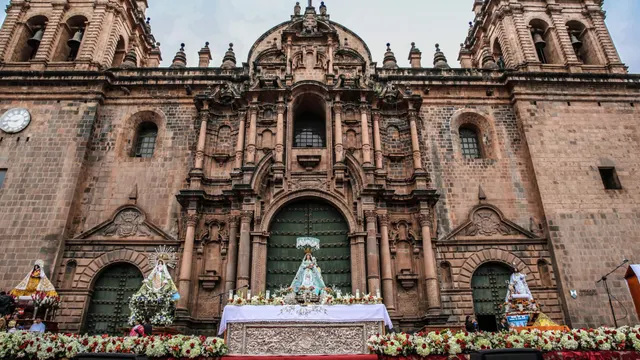
PromPerú describes it as a festival celebrated since colonial times and as a great expression of Andean culture. During the festival days, troupes with orchestras and dancers parade through the main streets of the historic center, and their street parade draws more than 20,000 people, among locals and Peruvian and foreign tourists.
In the city it has three moments: the Thursdays of Compadres and Comadres, the main Sunday with the water play and the yunzas, and the Kacharpari one week later. In between, timpu is cooked at home and the q’ashwas take to the streets, as Andina calls the group outings with music and dancing.
Compadres and Comadres: what they are and when they fall in 2027
They’re the two Thursdays that open carnival. In 2027, Jueves de Compadres is on January 28 and Jueves de Comadres on February 4.
The dolls
According to the tradition reported by Andina, the compadres made dolls out of their comadres’ old clothes. They hung them on the door, with signs highlighting their qualities, to surprise them. The comadres liked the idea and started doing the same.
Today the dolls are made from recycled materials and hung at midnight on Wednesday from poles or high places. They no longer represent only compadres and comadres: they also portray neighbors, coworkers and officials. Andina sums it up as humorous satire that shouldn’t cross into disrespect. There are contests that reward the funniest dolls and the most original messages.
The baskets
On those Thursdays people also exchange baskets decorated with balloons, streamers, pennants and flowers, filled with seasonal fruit, sweets and groceries.
As a traveler, all you need to do is walk through the center and the neighborhoods early in the day. If a doll makes you laugh, ask who it represents: there’s almost always a local story behind it.
Carnival Sunday: water, foam and talcum powder
The main Sunday, February 7, 2027, is the day of play. According to Andina, from very early on, men and women of all ages throw water, foam and mistura, colored flour, at each other. PromPerú adds flour balloons and paint in the Plaza de Armas, where there’s usually a stage with folk music bands.
The play reaches everyone who walks by, tourists included. If you don’t want to end up soaked, avoid the Plaza de Armas and the surrounding streets that Sunday; if you want to play, go out in clothes you don’t mind ruining.
What the authorities say about water
In Peru, every carnival brings renewed calls not to waste drinking water. The National Water Authority, quoted by Andina, asked people not to use water during carnival and proposed going back to traditional customs such as talcum powder and streamers, as well as dancing.
If you join in, choose foam and talcum powder over a bucket of water, and don’t soak anyone who isn’t playing.
Tip: keep your phone, camera and passport in a dry bag or a waterproof case, on the Thursdays and on Kacharpari day too. Foam and colored flour get into every crack and damage lenses and screens, and paint may not come out of your clothes.
What is the yunza or cortamonte?
The yunza, also called cortamonte, is one of the most awaited moments of carnival, according to PromPerú. A tree, sometimes an artificial one, is planted and loaded with gifts, and people dance in a circle around it. The trunk is struck with a machete until it comes down. When it falls, everyone rushes to grab as many gifts as they can, amid laughter and toasts.
Yunzas are organized in neighborhoods, communities and towns throughout the region, and also at municipal festivals like the one in Calca.
If you’re invited into the circle, join in. But when the machete blows begin, step back a few meters and keep children away. The tree comes down all at once and people dive for the gifts.
Troupes, dances and carnival contests
Comparsas, or troupes, are dance groups that go out with their own live music and costumes. Each province has its own style. At the 2018 Kacharpari, Andina saw songs and dances from the Canas and Tinta carnivals in the Plaza Mayor, along with the tupay from Espinar and delegations from Urubamba, the Sacred Valley, markets, neighborhoods and institutions.
Troupe contests
Many municipalities organize contests with a jury. One example with published rules is the Carnaval Qhasway 2025 of the Provincial Municipality of Calca, in the Sacred Valley: it was held on carnival Sunday, with a street parade in the morning and the contest in the Plaza de Armas.
The rules called for live music played on carnival-season instruments, with no electronic instruments and no music from outside the region, and at least 10 couples per troupe. There was also a festival of frutilladas and pucheros, plus yunzas.
Each municipality will announce its 2027 contests from January on.
Kacharpari: how the farewell to carnival works
The Kacharpari, also called Octava or “remate de carnavales” (the carnival finale), closes the season seven days after the main day. In 2027 it will be on Sunday, February 14. It’s organized by Cusco’s Municipal Festivities Company (EMUFEC).
It’s a big street parade with troupes, music and traditional dances, games and food. According to Andina, in 2024 the route ran along the extension of Avenida El Sol and through the Plaza Mayor to Plaza San Francisco. More than 50 delegations from La Convención, Urubamba, Calca and the high provinces were announced for that edition. The troupes sing songs with playful messages about falling in love.
The audience plays too: in 2018, Andina saw foam and water balloons thrown from the stands, with more than 200 police officers and firefighters in charge of security.
To get a good view, arrive early at Avenida El Sol and allow twice as much time for any trip through the center. EMUFEC will publish the 2027 route.
What do people eat at carnival? Timpu or puchero
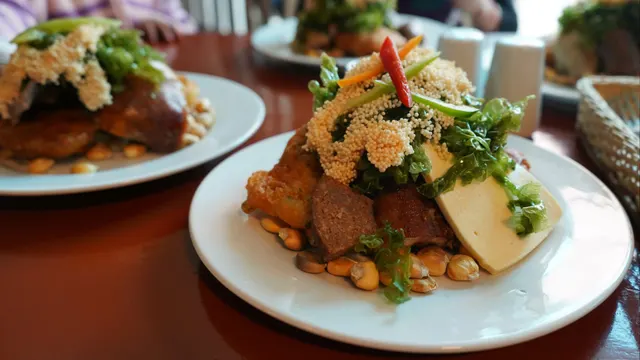
The carnival dish is timpu, or puchero. According to Andina, several meats, such as beef, lamb and hen, are boiled, and then cabbage, potatoes, moraya, chickpeas and rice are added. Sweet potatoes, peaches, pears and yuca are cooked in another pot. Everything is served separately, with its broth and a cabbage leaf.
- Kapchi: a stew of fava beans, onion and potatoes with milk and cheese, with mushrooms. It comes with rocoto relleno (stuffed rocoto pepper) and white rice.
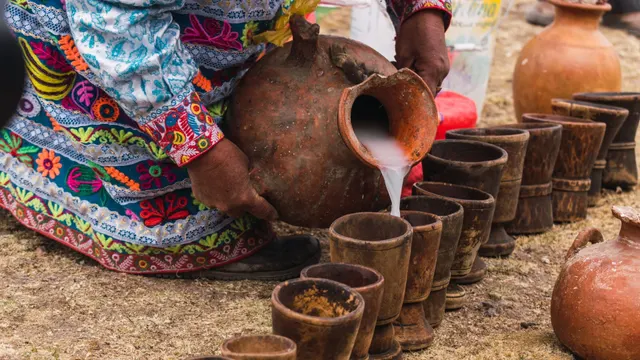
- Frutillada: chicha de jora with strawberries, boiled with cinnamon and lemongrass. It steeps for about eight days and is served with sugarcane liquor. We explain it in traditional Cusco drinks.
Timpu is above all a home-cooked dish for family gatherings. More dishes of the season in traditional Cusco food.
Carnivals in the provinces of Cusco
Outside the city, each province celebrates carnival with its own dances, music and songs.
The San Pablo Carnival (Canchis), Cultural Heritage of the Nation
It’s the carnival from the Cusco region that appears in the lists of carnivals declared Cultural Heritage of the Nation published by Andina. It was declared on September 24, 2010. It’s celebrated in the district of San Pablo, one of the eight in Canchis province, which bills itself as the cradle of the bandurria.
According to Andina, the declaration recognizes it as a ritual circuit with Indigenous and mestizo strands, of great cultural richness, with its own musical and choreographic expressions. Locals give thanks to the Pachamama with traditional dances, and there are contests such as the Urpiurqoy, the Colindaje Muyuy and the Chaqra Muyuy. It’s said that musicians leave their bandurrias by the springs at night, with flowers and coca leaves, because they believe a siren tunes them.
If you’re searching for the “Sicuani carnival” or the “Canchis carnival,” this is the one with the declaration. In the same province, whose capital is Sicuani, you’ll also find Raqchi, with the Temple of Wiracocha.
Other carnivals in the region
We haven’t found a national declaration for other Cusco carnivals, such as those of Canas or Tinta, so we don’t take one for granted. If you want to go to one, check the town’s program and confirm how to get back to Cusco at night.
How to experience carnival as a traveler
Weather: the height of the rainy season
Carnival falls in the middle of the rainy season, which in Cusco runs from December to March, with the heaviest rain from January to March. Check the Cusco weather and leave some margin for the unexpected.
What to bring
- A raincoat or rain poncho you don’t mind getting wet or stained.
- A waterproof case for your phone and a dry bag for your camera.
- Shoes that can get wet and a dry change of clothes at the hotel.
- Old or cheap clothes for the main Sunday.
The full list by season is in our Cusco packing list.
Do you need to book?
Carnival happens in the street and needs no ticket. If you want to stay in the historic center on the weekend of February 7 or 14, book a few weeks ahead, and expect music and noise near the Plaza.
Carnival and Machu Picchu in February
Article 10 of the tourism-use regulations for the Inka Trail Network closes it every February for the natural recovery of the ecosystems and the maintenance of the heritage and the services. During the carnival dates there’s no Inca Trail. In 2026, the network reopened on Sunday, March 1, according to El Peruano.
The closure applies to the trails, not to the citadel. You can reach Machu Picchu by train and bus, as we explain in how to get to Machu Picchu. Don’t schedule your visit on the carnival day you’re most interested in.
Important: the same regulations allow one or more routes to be closed at any time due to risk to visitors, unforeseeable circumstances or force majeure. If there’s heavy rain, confirm the condition of the roads and the train before leaving Cusco.
Summary: Cusco Carnival 2027 in four dates
- Thursday, January 28, Compadres: satirical dolls on poles and high places, and gift baskets.
- Thursday, February 4, Comadres: the comadres’ reply, one week later.
- Sunday, February 7, main day: water, foam and talcum powder in the Plaza de Armas, yunzas in the neighborhoods and timpu at home.
- Sunday, February 14, Kacharpari: the big parade of troupes that bids farewell to carnival.
- For your trip: a dry bag for your phone, clothes that can get wet, a raincoat and no Inca Trail in February.
Frequently asked questions
When is carnival in Cusco in 2027?
The main day is Sunday, February 7, 2027, the last Sunday before Ash Wednesday (February 10). Compadres is on Thursday, January 28, Comadres on Thursday, February 4, and the Kacharpari on Sunday, February 14.
How is the date of carnival in Cusco calculated?
It depends on Easter: Ash Wednesday falls 46 days before Easter Sunday, and the main day of carnival is the Sunday before it. That’s why some years it falls in February and others in early March.
What are Compadres and Comadres?
They’re the two Thursdays that open carnival. Dolls made from recycled materials appear hanging from poles and high places, poking fun, with humor, at neighbors, coworkers or officials, and people exchange baskets of fruit and sweets.
What is the yunza or cortamonte?
It’s a tree loaded with gifts that is planted in neighborhoods and towns. People dance in a circle around it and bring it down with machete blows; when it falls, everyone rushes to grab the gifts. Step back when the machete blows begin.
What is the Kacharpari?
It’s the Octava, or carnival finale, seven days after the main day. Cusco’s Municipal Festivities Company organizes it as a parade of troupes along Avenida El Sol and through the historic center. In 2027 it will be on Sunday, February 14.
Is carnival a holiday in Cusco?
It isn’t a national holiday: it doesn’t appear in the official gob.pe calendar, and in 2026 there was no regional non-working day for carnival in Cusco either. The main day falls on a Sunday, and Compadres and Comadres are working Thursdays.
What do people eat at carnival in Cusco?
Timpu or puchero, with several meats, cabbage, potatoes, moraya, chickpeas and rice, and sweet potato, peach, pear and yuca cooked separately. Also kapchi, a stew of fava beans and potatoes with milk and cheese, and frutillada to drink.
Which Cusco carnival is Cultural Heritage of the Nation?
The San Pablo Carnival, in Canchis province, declared on September 24, 2010. It’s a ritual circuit with Indigenous and mestizo roots, known for the bandurria.
Can you hike the Inca Trail during carnival?
No. The Inka Trail Network closes every February for maintenance and the recovery of the ecosystems. You can still visit Machu Picchu by taking the train and bus.
What should you bring to the Cusco carnival?
A waterproof case for your phone, a dry bag for your camera, a raincoat and clothes you don’t mind getting wet. It’s the height of the rainy season, which runs from December to March.
Official sources
CuscoRaqchiSacred Valley of the Incas

How we put this guide together
Written by Paul Pumalloclla · 17 years in tourism
- Official sources Prices, opening hours and rules checked against Peru’s Ministry of Culture, SERNANP, PromPerú and the train and bus operators.
- Sources cited Every guide links to the sources we used at the end.
- Always up to date When a rule changes, we update the guide and its date.
We’re not a travel agency: we don’t sell tours or take bookings. If a link belongs to a commercial partner, we label it next to the link, and that never changes the facts or the recommendations.
Guide history
- Published
- Last reviewed
Spotted something out of date?
Let us know and we’ll check it against the official source.
Report a change